A couple said this to me this week, and it stayed with me.
“It’s so simple, but it’s not easy. When I come to my partner with vulnerability, they meet me with vulnerability. When I come to them with anger, they meet me with anger.”
Right?
The way I show up is the way they show up. I’m literally watching myself in their response.
That’s the thing we don’t always see about love.
Why Couples Actually Argue
Most of us think we argue because of what gets said. The criticism, the snide remark, the thing they forgot, the thing we asked for and didn’t get.
But after years of working with couples, I can tell you the argument is almost never about the surface words.
It’s about how the message arrives.
When I bring my hurt wrapped in anger, my partner gets defensive. Of course they do. They respond to my anger, and they can’t see my hurt.
My intention was: please see me. Please hear what’s underneath.
But the impact was: they felt attacked. So they protected themselves.
And then I tell myself the story that they don’t care. That they never listen. That they’re the problem.
Sound familiar?
Intention vs Impact: What Destroys Love in Relationships
In every argument I see, this is the gap:
Intention: “I want to be seen.”
Impact: “You feel attacked.”
Both people are telling the truth. One partner is telling the truth when they say they just wanted to share their hurt. The other is telling the truth when they say they felt criticised and shut down.
And this is the part we don’t always like to admit:
The first partner shaped how the message was received. They aren’t bad or wrong. They spoke with anger, so their partner heard an attack.
How we say it is more important than what we say.
If I deliver “please come closer” through a clenched jaw, my partner’s body hears “stay away.” Their nervous system doesn’t read my words. It reads my throat, my volume, my eyes. It reads what’s beneath the words.
This is true for them too. And me. And every couple I’ve ever worked with.
What’s Underneath the Anger
In 15 years of practice, I’ve found the same feelings underneath the anger in almost every argument.
I’m scared.
I’m hurting.
I need you.
I miss you.
I feel alone in this.
I’m afraid you don’t see me.
These feelings aren’t weak. They’re the most powerful feelings we can share with each other. Our vulnerability creates intimacy. When we hide our vulnerability, we create walls, loneliness and disconnection.
Most of us were never taught how to share these feelings openly.
So we reach for what we know: sharp words, distance, the eye roll, the silent treatment, the criticism stated as a fact. Anger makes us feel strong, and our partner moves further away.
Your Partner Is Your Mirror
Here is the part that stayed with me.
The way I show up is the way they show up.
If I bring vulnerability, they bring vulnerability.
If I bring anger, they bring anger.
Which means in every argument I’m watching myself in their response.
Now some of you reading this will already be wanting to argue with me. “But what about when my partner is being unfair? What about when they start it? What about when I’m the one being vulnerable and they shut down?”
That’s fair, and both things can be true. There are dynamics where one person genuinely is more open and the other is genuinely more shut down. There are times when one of you is doing more of the work in the relationship.
But even in those dynamics, the mirror is still mostly true.
When we drop into vulnerability, the mood in the room changes. Our partner’s face softens, even if just slightly. They might not match us in that moment, but they start to open.
When we come in with anger, they close up.
What This Looks Like in Practice
Here’s an example.
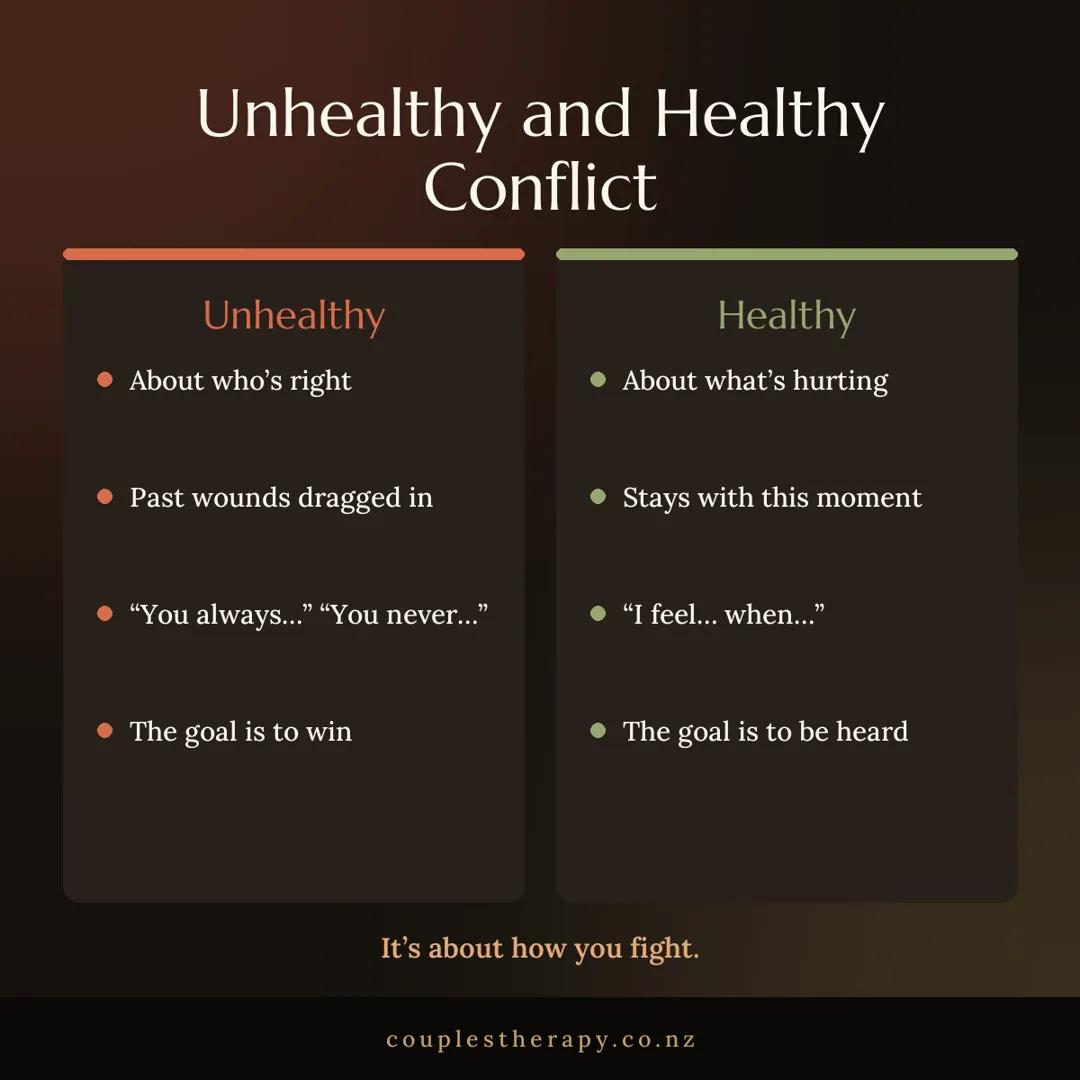
The anger version sounds like this:
“You never listen. You’re always on your phone. I might as well not be here.”
The vulnerable version sounds like this:
“When you’re on your phone and I’m next to you, I feel invisible. I miss you. I want to be close.”
The message is the same. The way it’s said is completely different.
The first version makes your partner defensive. They hear: “You’re a bad partner.” They respond with: “That’s not fair, I do listen. You’re never satisfied.”
The second version makes them soften. They hear: “My partner wants me. My partner misses me.” They respond with: “I’m sorry. Come here.”
It’s the same need and the same hurt, with a very different outcome.
Why the Vulnerable Version Is So Hard
If this is so simple, why don’t we all just do it?
Because being vulnerable means we open ourselves to the person who can hurt us the most.
The anger version protects me. It says, “I’m not weak. I’m not desperate. I’m not the one losing here.”
The vulnerable version says, “I want you. I miss you. I’m scared you don’t see me.”
Do you feel the difference?
The first one keeps me protected. The second one opens me up.
For most of us, the second one feels like dying. Especially if at some point in our lives, we reached for someone with vulnerability and got punished for it.
This is why so many people I work with say the same thing: “I know I should be more vulnerable. I just can’t.”
They can. They just haven’t practised, and they’re protecting an old wound.
What to Do Instead
So what’s the work?
The work isn’t to make your partner softer.
The work is to stop hiding behind anger and say what’s underneath: “I’m scared. I’m hurting. I need you.”
It takes courage.
You let your throat soften.
You let your belly soften.
You’re willing to be seen as the one who is scared, even if it means you don’t get to be right.
It isn’t easy. The couple who said it to me were correct about that.
But it’s the way back to each other.
A Practice for the Next Argument
Next time you feel the anger rising at your partner, try this.
First, pause for a moment, long enough to feel your feet on the floor.
Then ask yourself: what’s underneath this?
Ask what you’re feeling, and leave aside what they did wrong.
Usually it will be hurt, fear, loneliness or the longing to be seen.
Then, if you can, soften.
Soften your lips, your throat, your heart and your belly.
And say what’s underneath.
“I’m hurting.”
“I miss you.”
“I’m scared we’re losing each other.”
It will feel scary. You’ll want to protect yourself again. That’s okay, and it’s normal. You don’t have to do it perfectly. You just have to do it once, and then again, and then again.
Every time you share what’s underneath, your partner responds differently. And the closeness that has been missing for months, sometimes years, starts to come back.
When You Need More Than a Practice
Some arguments have been going for so long that no amount of vulnerability will shift them on your own. The negative pattern has been running for too long and is set in stone. There is too much past hurt. Maybe the trust has eroded over the years.
That’s when couples therapy can be incredibly useful. Life saving, I’d say. It doesn’t mean anyone is broken. Sometimes we need a third person to help us step out of the pattern: someone who can support both of you, see what’s underneath and help you find your way back to each other.
This is the work I do with couples. It’s the work I love most. I get to watch two people remember why they chose each other and find the words to keep choosing each other.
If this post touched something in you, do let me know. And reach out if you want more support.
With a big warm hug,
Tarisha
Want support with this in your own relationship? Find out about couples therapy with Tarisha, a private retreat for two, or our retreats for couples: the Valentine’s Retreat and The Wanaka Adventure. Or start with a free discovery call.