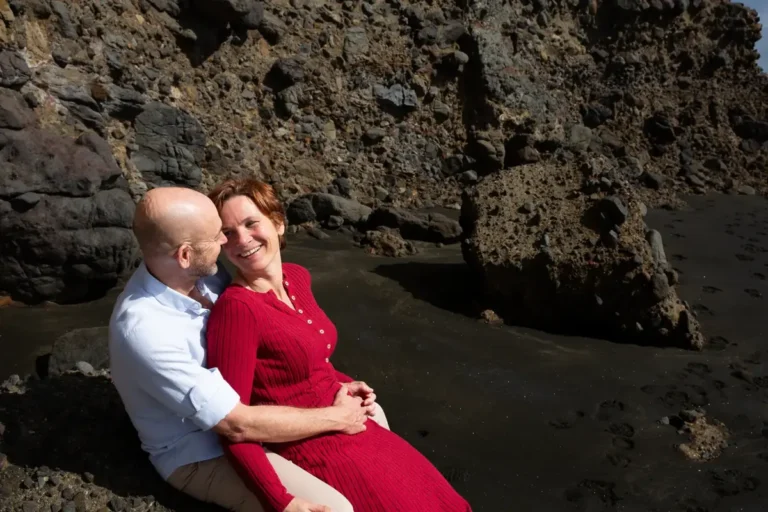
It’s 10.30 pm.
The kitchen is clean, the dog is asleep, and the teenagers are behind closed doors.
Two people who once couldn’t keep their hands off each other are scrolling on separate phones in the same bed.
That’s where recovery from a sexless marriage often begins. There’s usually no affair and no screaming match, only the slow realisation that you’ve become two tired friends running a household.
Does this sound familiar?
A marriage with little or no sex isn’t automatically broken. Many things can change how often a couple has sex:
- Illness
- Grief
- Recovery after a birth
- Medication
- Caring for other people
- Trauma
- Different levels of desire
The pain comes when neither of you can talk honestly about it, or when one of you carries the rejection while the other braces for pressure.
Recovery is possible.
But what I see with couples is that it rarely starts by scheduling sex for Thursday night and hoping the chemistry turns up.
What Sexless Marriage Recovery Actually Looks Like
The couples who rebuild their erotic connection don’t usually go back to the relationship they had at 28.
They build something more deliberate.
It’s a mature love with more honesty and more choice in it, and often more passion, because they’ve stopped pretending.
Recovery involves two tasks that are tied together.
First, you repair emotional safety, so neither of you has to defend, chase, shut down or pretend.
Then you create the conditions for eroticism.
That means:
- Space
- Novelty
- Attention to your bodies
- Play
- The freedom to want sex instead of going along with it
That order can feel frustrating if you’re the partner who has been waiting years for sex.
But nothing kills desire faster than pressure.
And endless talking with no movement towards touch can leave the partner who wants more sex still feeling unwanted, so good work looks after both of you at once.
Four Sexless Marriage Recovery Examples
A note first: these four couples are made up, and they aren’t clients of mine. I’ve written them to show you the patterns I see most often.
1. The couple who stopped treating sex as a test to pass
Maya and Ben have been together for 19 years and haven’t had sex in almost two.
Ben raised it carefully at first, then resentfully, and then he stopped raising it.
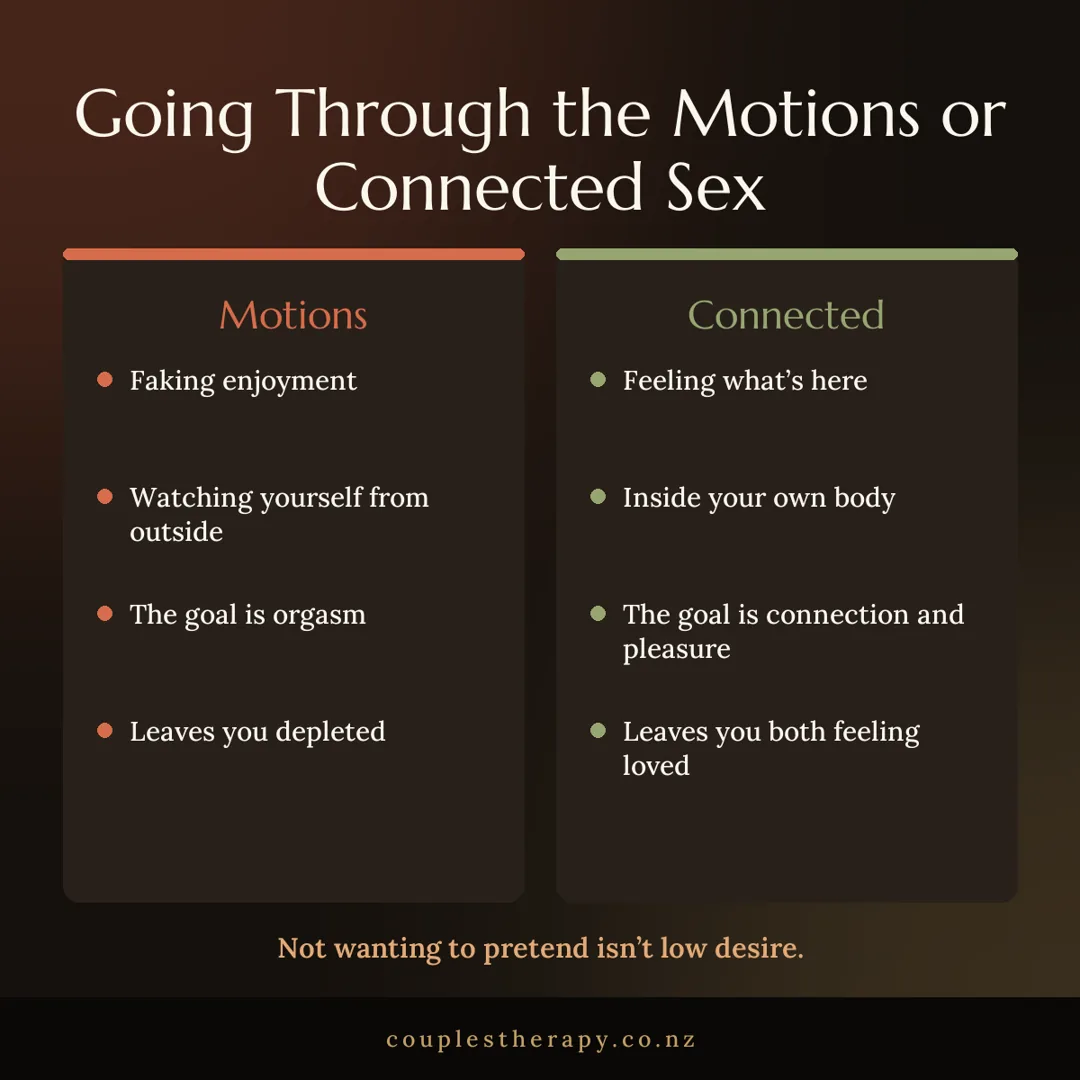
Maya feels as if every cuddle is a request for sex, and the more he looks for reassurance through sex, the more her body goes numb.
Their breakthrough starts with a brave conversation, long before any intercourse.
Ben names the loneliness under his frustration: “When you turn away, I tell myself I’m unwanted.” Maya says what she has never felt safe to say: “When you touch me expecting an outcome, I disappear.”
They agree on a six week reset with no intercourse, no goal driven touching and no sulking.
Three times a week they practise twenty minutes of clothed touch with no demand in it, and the partner receiving directs the pace and pressure.
They also rebuild affection outside the bedroom, with a hand on the lower back while cooking, a long kiss at the door and the odd cheeky text.
With no goal to reach, Maya’s body starts to relax.
Ben learns that he doesn’t have to earn closeness through sex.
Their sex life comes back gradually, and the biggest change is that both of them can say yes, no, slower or not tonight without either of them feeling ashamed.
2. The couple who discovered that anger was keeping them apart
David and Priya have a successful business, adult children, a beautiful home, and almost no physical intimacy.
From the outside they look sorted.
In private, every conversation is tense.
Priya believes David is emotionally absent. David believes Priya criticises everything he does.
Their sexless marriage has little to do with libido.
Underneath there’s an attachment injury, where neither of them feels chosen, or safe enough to open up.
Using an Emotionally Focused Therapy (EFT) approach, they map their cycle.
Priya protests through criticism because she’s afraid she doesn’t matter, and David withdraws because he’s afraid he’ll fail again.
Once they can see the pattern as the enemy, and stop seeing each other that way, they can interrupt it.
David starts saying, “I’m getting flooded, but I’m not leaving you. Give me ten minutes and I’ll come back.” Priya practises asking directly for reassurance, where before she would have listed everything he’d done wrong.
Their first sensual shift is an evening on the verandah where they hold each other and cry.
Desire has room to come back once the resentment eases.
3. The couple who made room for the bodies they have now
After menopause, Leanne has pain during penetration and a dramatic drop in desire. Her husband, Daniel, takes it personally, then feels guilty for taking it personally.
They slide into avoidance, where neither of them mentions sex because they’re both afraid of what the conversation will expose.
Their recovery takes sex therapy, medical support and a wider definition of sex.
That last piece turns out to be powerful.
For years, without ever saying so, they’d both treated penetration as the main event and everything else as foreplay, so when pain made that script impossible they assumed their erotic life was over.
It isn’t over.
They explore arousal without a timetable, along with massage, oral pleasure, toys, fantasy, and touch that doesn’t need to lead anywhere.
Daniel learns to ask what feels good in the moment and stops relying on what worked decades ago, and Leanne stops apologising for a body that’s going through a big change.
Their intimacy becomes something they create together.
I don’t see that as a consolation prize.
It can be deeply erotic to be met as the person you’ve become, without being compared to an earlier version of yourself.
4. The couple who left the house to find each other again
Sophie and Aaron have become excellent co-managers of calendars, bills, school drop offs, ageing parents and meal plans. Their marriage runs smoothly, and there’s no fun or passion left in it.
They need more than another serious chat over a glass of wine while folding the laundry.
They need a break from their routine.
On a guided couples retreat, they step outside their routines, work with the body as well as the mind, and take on challenges that ask them to trust each other, take a risk and talk honestly.
Adventure lets them see each other in a new way, though it doesn’t magically create desire.
Sophie watches Aaron become playful and brave on a high ropes course. Aaron sees how much life comes back into Sophie when she isn’t carrying everyone else’s needs.
Back home, they protect one night a fortnight for a shared experience with no practical agenda.
It might be a coastal walk, live music, a new restaurant or even a terrible pottery class.
Novelty can’t take the place of repair.
But once emotional safety is growing, new experiences can wake up the part of you that remembers your partner is more than the person asking where the car keys are.
What These Examples Have in Common
None of these couples fix their marriage by trying harder to have sex.
They stop treating sex as proof of whether they’re loved.
They work on the emotional pattern behind the lack of sex, make room for an honest no, and get curious about what arousal and connection could look like now.
They also accept that progress doesn’t run in a straight line.
A beautiful week can be followed by a flat one, and old protective habits can come back when there’s work stress, family illness or conflict.
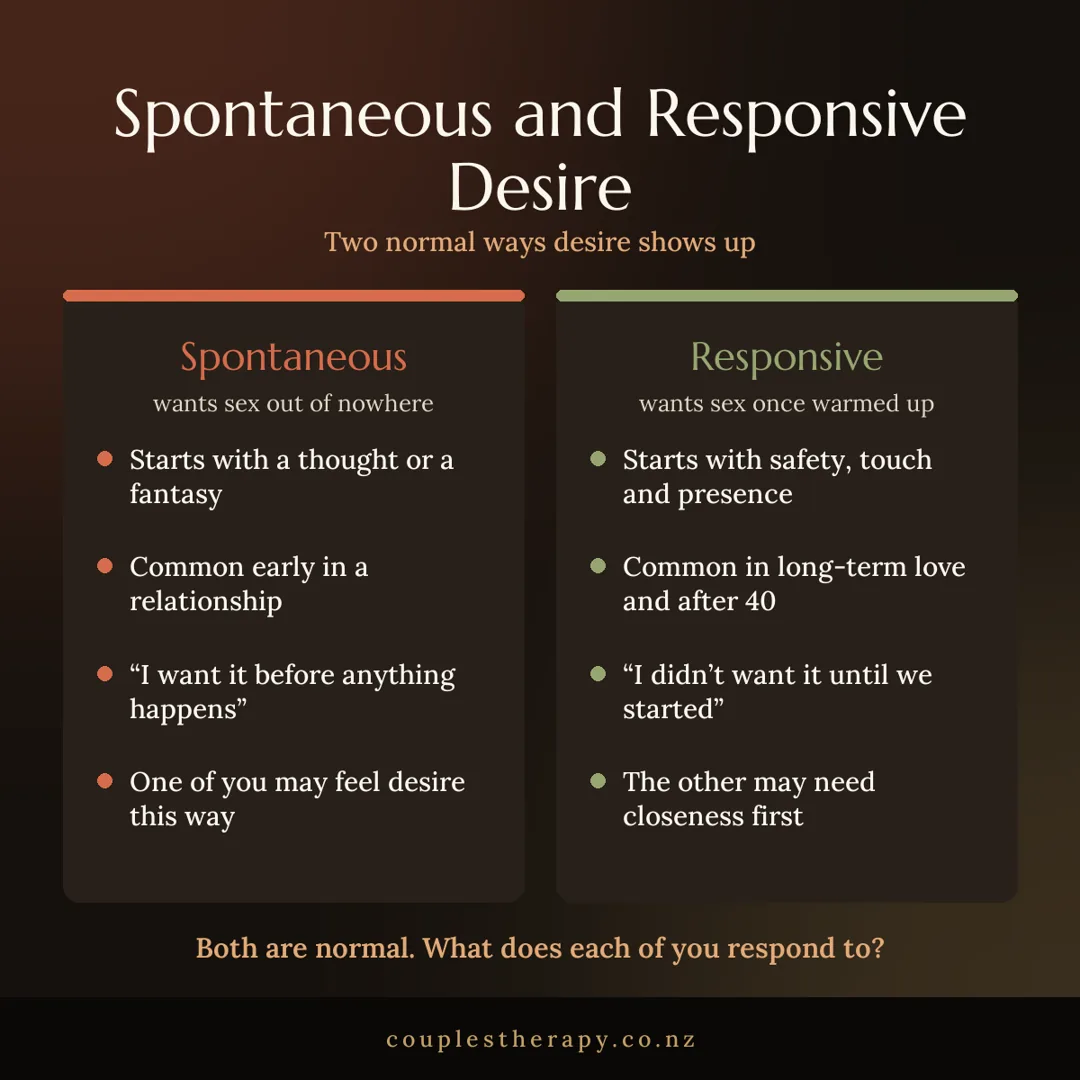
Recovery doesn’t mean you’ll always feel spontaneous desire at exactly the same time.
It means you can find each other again without blame.
If there has been betrayal, coercion, unresolved trauma, ongoing pain or years of contempt, please don’t try to white knuckle your way through it with date nights and scented candles.
Specialist support can help you work with the actual wound.
At Couples Therapy & Retreats, I work with couples on what’s possible: repairing the hurt, feeling connected in your bodies, and creating a sex life that suits the two of you.
The deepest love may still be ahead of you, but it asks for more than hope.
It asks you to be honest and brave, and willing to meet your partner as a living, changing human being.
Want support with this in your own relationship? Find out about couples therapy with Tarisha, a private retreat for two, or our retreats for couples: the Valentine’s Retreat and The Wanaka Adventure. Or start with a free discovery call.