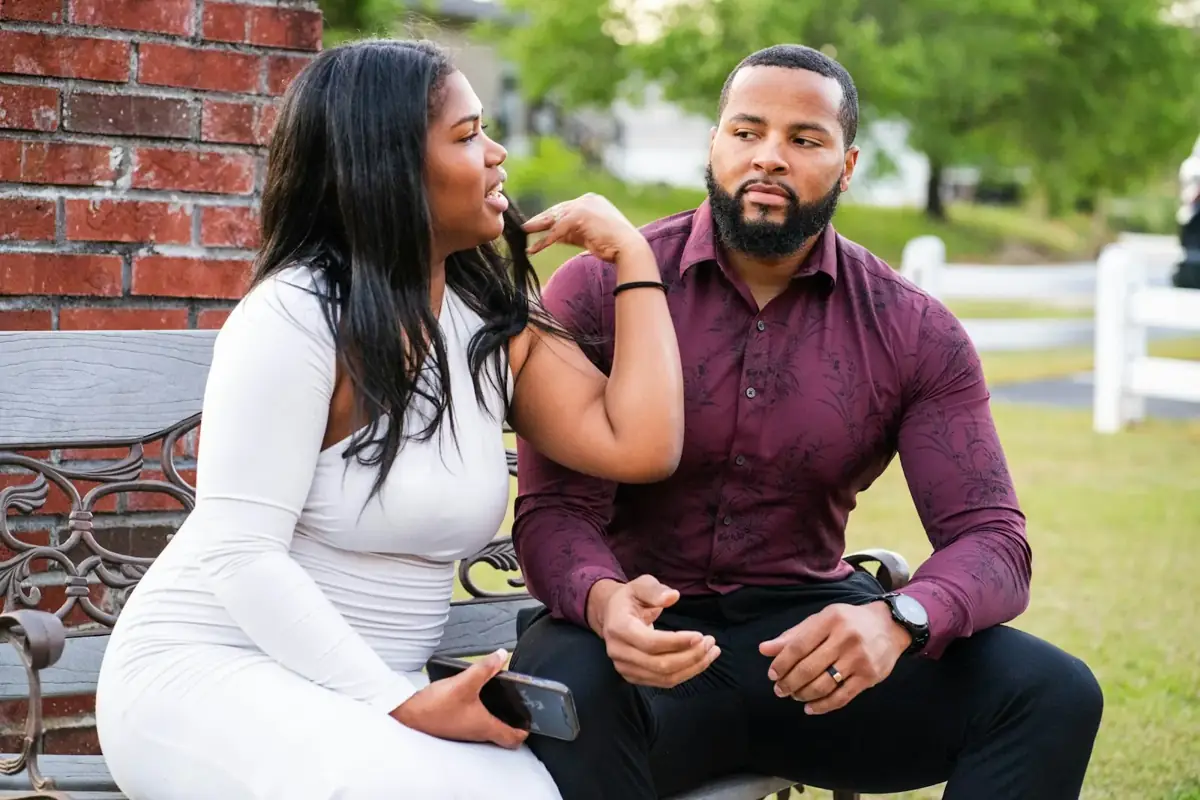
She brings it up again.
The same thing she brought up last week.
You can feel your shoulders go tight before she’s finished the sentence.
You’re not a bad husband. You work hard, you turn up, you do your share. So why does it feel like nothing you do is enough?
I’m Mark.
I run couples retreats with my partner Tarisha, who’s a couples and sex therapist. I’m not a therapist. I’m a bloke who used to do exactly what you might be doing now.
This is what I wish someone had explained to me twenty years ago about why she keeps pushing.
What I used to do
I grew up in a world where men didn’t talk about feelings. You got on with it. If something was wrong, you fixed it, or you put up with it.
So when things got hard at home, my instinct was to go silent.
- Go to the shed.
- Go for a run.
- Wait for it to blow over.
I thought I was protecting the peace.
What I didn’t realise was that my partner experienced that silence as me leaving. Every time I went silent, she felt more alone.
The more alone she felt, the harder she pushed. And the harder she pushed, the more I wanted to get out of there.
Sound familiar?
Why she keeps pushing
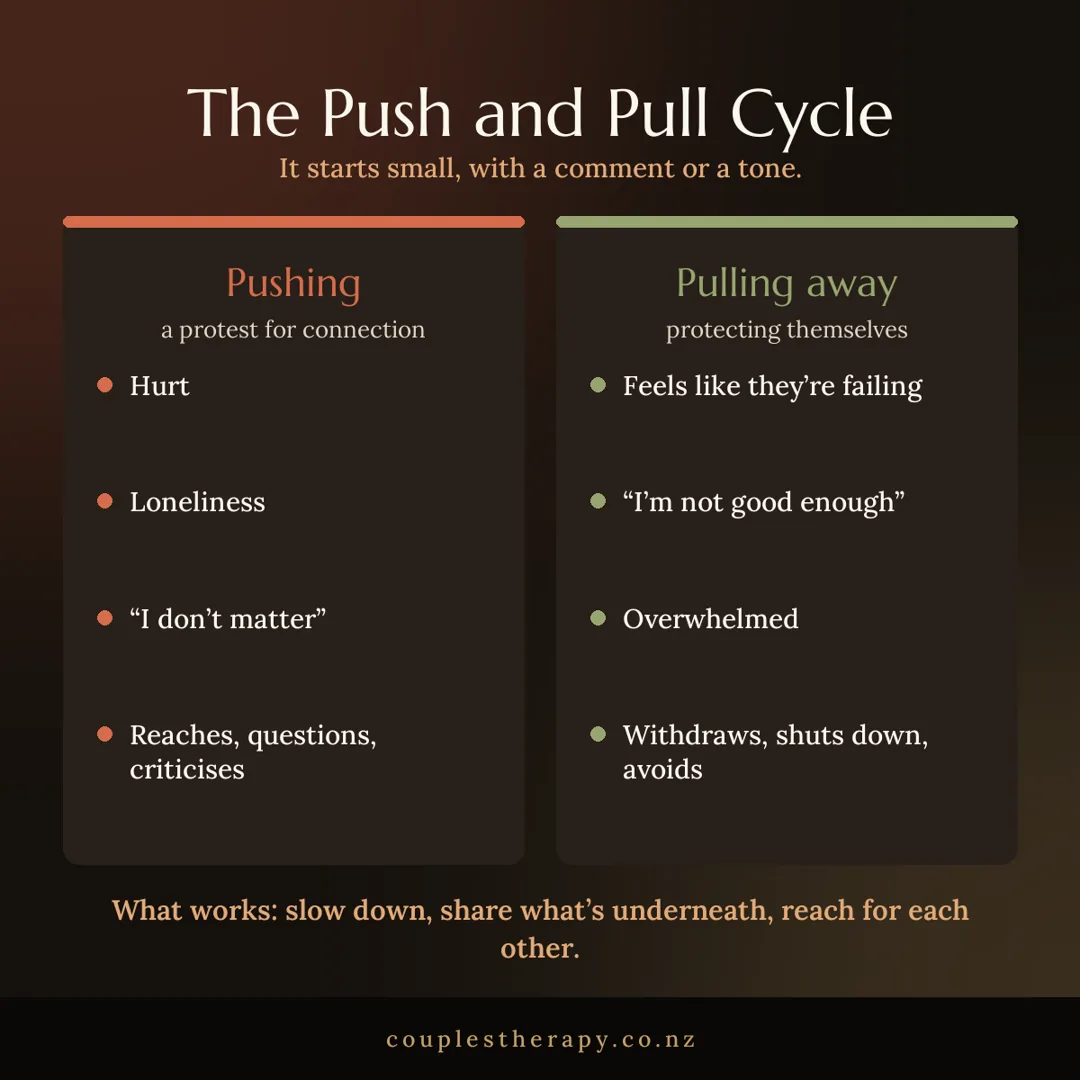
When she pushes, she isn’t having a go at you. She’s trying to get close.
It usually starts small.
A distracted reply. A week of being two busy people passing in the hallway.
She feels the distance before you do, and she reaches. She asks. She raises it.
If nothing changes, she pushes harder, and sometimes it comes out as criticism. “You never listen.” “Why don’t we ever talk anymore?”
Underneath, she’s saying one thing: come back to me.
What’s going on for you
You hear the criticism and feel like you’ve failed again.
Your body tells you this is going to turn into a fight.
So you protect the peace the only way you know. You go silent, change the subject or leave the room.
Underneath, you’re saying: I don’t want to make it worse.
The more she reaches, the more you retreat. The more you retreat, the more she reaches.
In Emotionally Focused Therapy (EFT), the kind of couples therapy Tarisha uses, this is called the pursue and withdraw cycle. She’s the pursuer and you’re the withdrawer.
Tarisha explains it in her post about the cycle.

The day I saw it
The first time someone explained this cycle to me, I felt a bit sick. Because it was us. Exactly.
She wasn’t attacking me. I wasn’t rejecting her.
We were both trying to protect the relationship, and we were wrecking it. I’d spent years thinking I was the problem, or she was the problem.
The pattern was the problem.
What to do instead
You don’t have to become someone who talks about feelings for hours. Try these.
Stay in the room a bit longer. When you want to walk out, stay for one more minute.
If you do need a break, say so and say when you’ll be back: “Give me 30 minutes. I’m not leaving you. I’ll come back.”
Then come back.
Say one sentence about what’s going on for you. It can be short.
- “I’m overwhelmed.”
- “I’m scared I’ll get it wrong.”
- “I don’t know how to make you happy, and it scares me.”
I’ve watched blokes who hadn’t said how they felt in twenty years say one sentence like that. And I’ve watched their wives soften, because that’s what they wanted: to be let in.
Ask her what it’s like for her. “What’s it like for you when I go silent?” Then listen without defending yourself.
Name it together. When it starts, either of you can say, “We’re doing it again.” You both take a breath.

Getting help isn’t weakness
I used to think a grown man sorts out his own problems.
But you’d get a coach to improve your golf. You’d take your ute to a mechanic.
Your relationship is the most important thing you’ve got, and learning how to do it better is backing yourself.
Want to understand what’s happening between the two of you? Come to Reignite Your Love, a 3 hour workshop in Auckland about the emotional and sexual cycle and how to step out of it. Or start with a free discovery call.