
You’re talking, and they’re scrolling.
Having a partner always on their phone can be lonely.
You tell them something about your day and get a nod. You sit down together on the couch, and the screen lights up between you again.
It can leave you feeling like you’re living with someone who’s only half there. And when you finally say something about it, it often comes out sharper than you meant, and the evening goes downhill from there.
Does this sound familiar?
In this post I want to look at what the phone might be doing for your partner, and how to ask for their attention in a way that brings them closer instead of starting a fight.
Why a partner always on their phone hurts so much
It can feel silly to be upset about a phone.
But what you’re reacting to is usually bigger than the screen. Under the irritation there’s often a question: am I still important to you?
When you reach for your partner, with a story or a hand on their arm, and they keep looking down, your body registers it as a small rejection. One of those is nothing. Hundreds of them over months can add up to feeling alone in your own living room.
What I see with couples is that the phone becomes the thing they argue about, and the longing underneath goes unsaid.
What the phone is doing for them
Before you bring it up, it helps to get curious.
Phones are designed to be hard to put down, so some of this is plain habit. But for many people the phone is also doing a job. It might be:
- an escape from stress at work, money worries or a head that won’t switch off
- a way to rest when they’re exhausted and have nothing left to give
- a way of avoiding a conversation, or a mood in the house, they don’t know how to handle
- a place where they feel capable or liked when things at home feel tense
- something to fill the gap when the two of you have stopped talking much
None of this makes it okay to tune you out. It does mean the phone is often a symptom of tiredness or tension, more than the cause of the distance.
You know what I mean, right?
If your partner reaches for the phone the moment things get a bit tense, notice that. In Emotionally Focused Therapy we’d call it withdrawing: stepping back to calm things down inside. It’s one half of a very common pattern, which I write about in the anxious and avoidant dance many long-term couples get caught in.
Why nagging doesn’t work
Most of us start with a comment.
“You’re on that thing again.” “Can you put it down for five minutes?” “I might as well be talking to the wall.”
These come from hurt, but they land as criticism. Your partner hears that they’re doing something wrong, feels a bit ashamed or defensive, and protects themselves by arguing back or by going further into the screen.
Then you push a bit harder, and the phone gets more interesting. Over time you become the phone police, which is a lonely job, and your partner starts to feel watched and judged in their own home.
How to bring up phone use without a fight
Timing helps a lot.
Don’t raise it the moment you feel ignored, when you’re already stung. Pick a calm time when you’re both fed and not in a rush, and keep it short.
Then talk about yourself and what you miss, rather than about their phone. If your partner’s always on their phone in the evenings, you could say something like this:
“I’ve noticed I’ve been feeling a bit lonely at night. I miss talking with you. Could we have some time each evening without phones, just us?”
See the difference?
There’s no accusation in it. You’re telling them what you feel and asking for something small and specific they can say yes to. For more on this kind of talk, I’ve written about conversations that matter.
It also helps to ask about their side. “I wonder if the phone is a way to switch off after work. Is that what it’s like for you?” You might learn how tired they’ve been, or what they’ve been avoiding, and that can make the two of you feel more like a team.
Try this: agree on two phone-free times each day, like the first ten minutes after you both get home and dinner. Put the phones in another room, out of sight. Keep it small enough that it’s easy to stick to.
Asking for attention in the moment
Sometimes you need them right now.
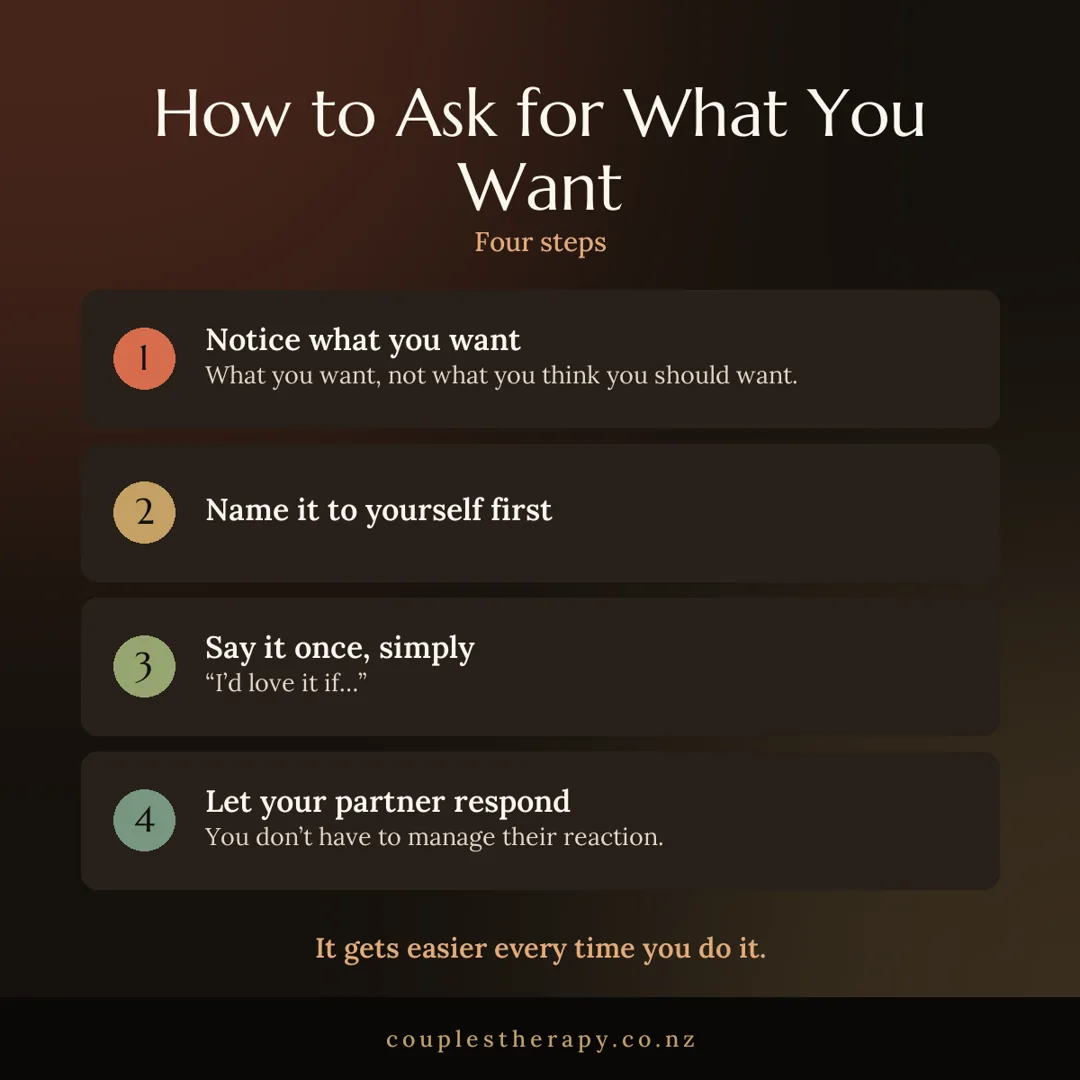
Instead of commenting on the phone, ask for what you want: “Can I have you for a minute? I want to tell you something.” Most people can put a phone down for that, especially when they don’t feel told off.
When they do look up, turn towards them and enjoy the moment. If putting the phone down usually means hearing a complaint, it’s understandable that they’ll start keeping it in their hand. Being listened to with attention goes both ways, and it’s lovely to receive.
Do you notice how different it feels to be asked rather than told?

Look at your own phone too
This one’s a bit uncomfortable.
Many of us complain about our partner’s phone and then pick up our own the minute they leave the room. Have an honest look at your own habits before you raise it, and offer to change too.
“Let’s both put them away after dinner” lands very differently from “You need to put yours away.” It turns the problem into something you’re working on together, and your partner is far more likely to say yes.
When the phone is a sign of something bigger
Sometimes the phone is just a habit that’s crept in.
But if your partner seems to use it to avoid you most of the time, or you’ve had the same fight for years, there may be more going on between you. Some couples have drifted so far that the phone fills the space where connection used to be. You might find these signs you’re drifting apart useful.
If the phone is hiding something, like messages they don’t want you to see, that’s a different and often painful conversation. It’s a good time to get support.
Couples therapy can help you both understand the pattern you’re in and find your way back towards each other.
Want support with this in your own relationship? Start with a free discovery call and we’ll talk about what would help the two of you most.