
You’ve been unhappy for a while now.
And you don’t know how to tell your partner you’re unhappy without it blowing up.
Maybe you’ve tried before. You chose your words carefully, and it still turned into a fight about who does more, or who’s the problem.
So you stopped bringing things up. You swallow it and get on with the day, and the unhappiness sits under everything. Some days it leaks out as a sharp comment or a cold shoulder in bed, and your partner has no idea what’s going on.
Does this sound familiar?
There’s a way to say it that gives you both a much better chance.
Why it helps to say it early
Unhappiness is easier to talk about while it’s still small.
Once it’s big and old, it’s much harder, because by then it comes with a long list of evidence and a lot of hurt.
What I see with couples is that most of them wait too long. They don’t want to rock the boat, or they hope it’ll pass, or they’re not sure their feelings are “allowed”. By the time they speak, they’re already exhausted, and it comes out as an accusation.
Unspoken unhappiness tends to turn into resentment. If that’s where you are, this post on healing resentment in your marriage may help.
If something’s been bothering you for a few weeks, now is a good time to say it.
Early conversations also tend to be shorter. You’re talking about one thing that happened last Tuesday, and your partner has a fair chance of doing something about it. When you wait a year, you’re asking them to answer for a whole year at once, and very few people can do that without feeling attacked.
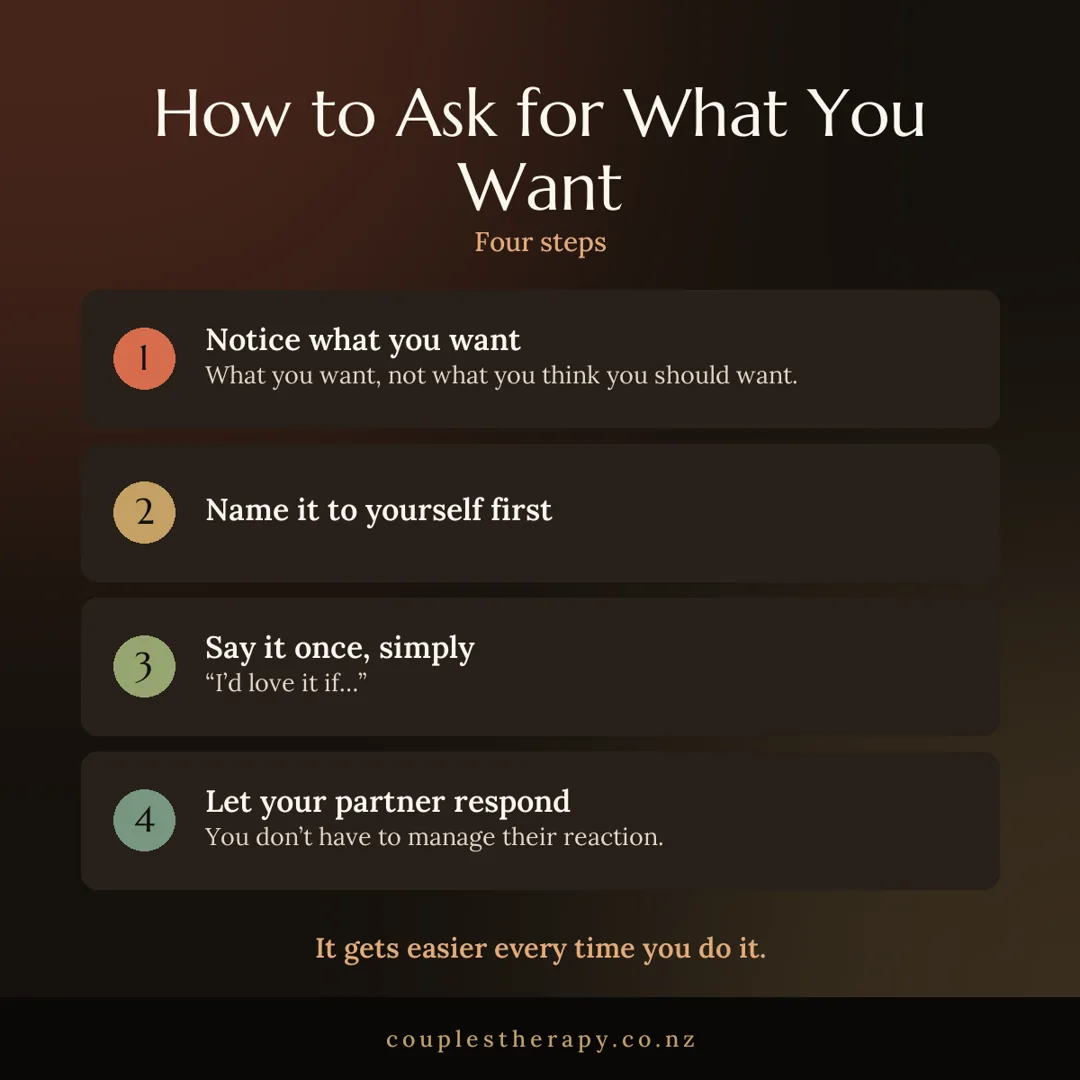
How to tell your partner you’re unhappy
Start with what you feel.
“You never…” and “You always…” will put almost anyone on the defensive. “I’ve been feeling…” invites them in.
Here’s a simple shape you can use:
- Say what you feel. “I’ve been feeling lonely lately.”
- Say when you feel it. “Especially in the evenings, when we’re both on our phones.”
- Say what you’d love. “I’d love us to have some time to talk, even twenty minutes.”
- Ask how it’s been for them. “How has it been for you?”
Notice what’s missing. There’s no blame, and no list of everything they’ve done wrong.
Keep it to one thing at a time. If you bring the whole list, your partner will most likely defend the weakest point on it, and the thing you most wanted them to hear gets lost.
It also helps to say why you’re raising it. “I’m telling you because I want us to be close” lands very differently from weeks of silence and then an explosion.
Try this: before you talk, write the feeling down in one sentence. If the word “you” appears more than once, rewrite it until the sentence is mostly about you.
Picking the right moment
Timing makes a big difference.
Some moments tend to go badly:
- The minute one of you walks in from work
- Late at night, when you’re both tired
- After a few drinks
- In the car on the way to see family
A better time is when you’re both fed and rested and not rushing anywhere. Some couples find it easier walking side by side, because there’s less pressure than sitting face to face.
You can also give a heads-up. “There’s something I’d like to talk about this weekend. It’s nothing scary, and I’d like us to have time for it.” That way your partner doesn’t feel ambushed.
What to do if they shut down
Sometimes you do everything right and your partner still goes silent.
They might look at the floor, change the subject, or say “Fine, whatever you want.” That can feel like rejection, and it’s tempting to push harder.
What I often see is that the partner who shuts down is overwhelmed. Hearing that you’re unhappy can land as “I’ve failed you”, and going still is how they cope with that feeling.
Pushing usually makes them go further away. This is the pattern I describe in the anxious and avoidant dance, and it’s one of the most common in long-term couples.
You know what I mean, right?
Instead, try slowing right down:
- “I can see this is a lot. I’m not going anywhere.”
- “You don’t have to answer now. Can we come back to it tomorrow?”
- “I’m telling you because I miss you, and I want more of us.”
Then come back to it, as you said you would. A pause only works if someone follows it up.

If it turns into a fight anyway
It happens, even with the best words.
If voices start rising, stop and say so. “This is turning into a fight, and I don’t want that. Can we take a break and try again later?” Then take twenty minutes apart.
When you come back, start with what you heard from them before going back to your own point. Feeling heard calms most people down. These ideas on attentive listening can help with that part.
Try this: agree that whoever raised the issue gets five minutes to speak while the other one only listens. Then you swap, with no interrupting and no fixing.
When the unhappiness is bigger
Sometimes it’s more than a niggle.
Maybe you’ve started wondering whether you want to stay. It’s still worth saying, and it helps to have support when you do. A conversation that big often goes better with someone in the room who can slow it down and help you both be heard.
That’s a lot of what I do in couples therapy. Many couples come to me because they can’t talk about what’s wrong without it going badly, and they want to learn how. For more ideas on starting the harder talks, have a look at conversations that matter.
Want support with this in your own relationship? Start with a free discovery call and we’ll talk about what would help the two of you most.