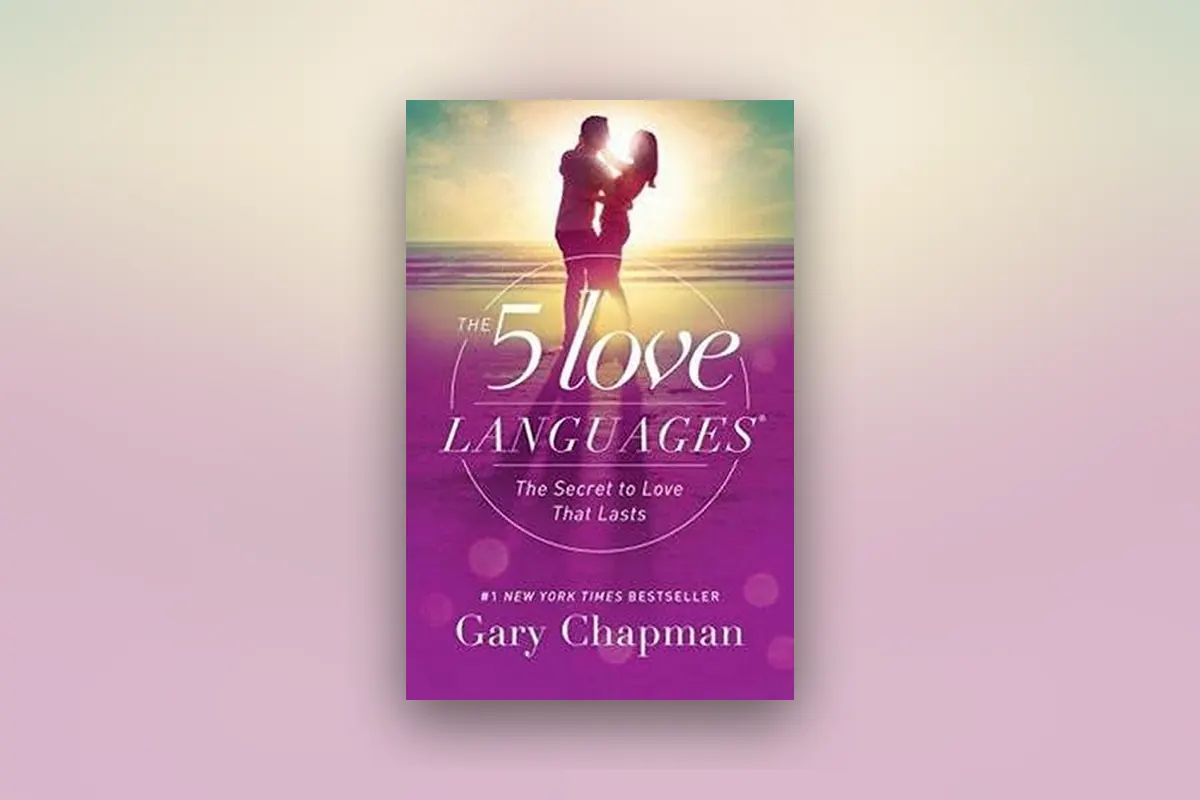
This is probably the best-known relationship book there is.
You’ve probably heard of it even if you haven’t read it.
In this 5 Love Languages review I’ll give you my answer as a therapist, along with what researchers have found since it was written.
In one line: it shows you that your partner may feel loved by different things than you do, and asks you to act on that.
That’s a small idea.
For some couples it’s exactly the one they’ve been missing.
What the book is about
The 5 Love Languages was first published in 1992.
Gary Chapman is a Baptist pastor in North Carolina who developed the idea while counselling couples at his church. The current paperback is about 200 pages, and the book’s editions have sold around 20 million copies.
Chapman kept meeting couples where each partner believed they were being loving and the other didn’t feel it. His explanation is that people express and receive love in different ways, which he calls languages.
If you only ever speak your own, your partner can miss it completely.
The main ideas
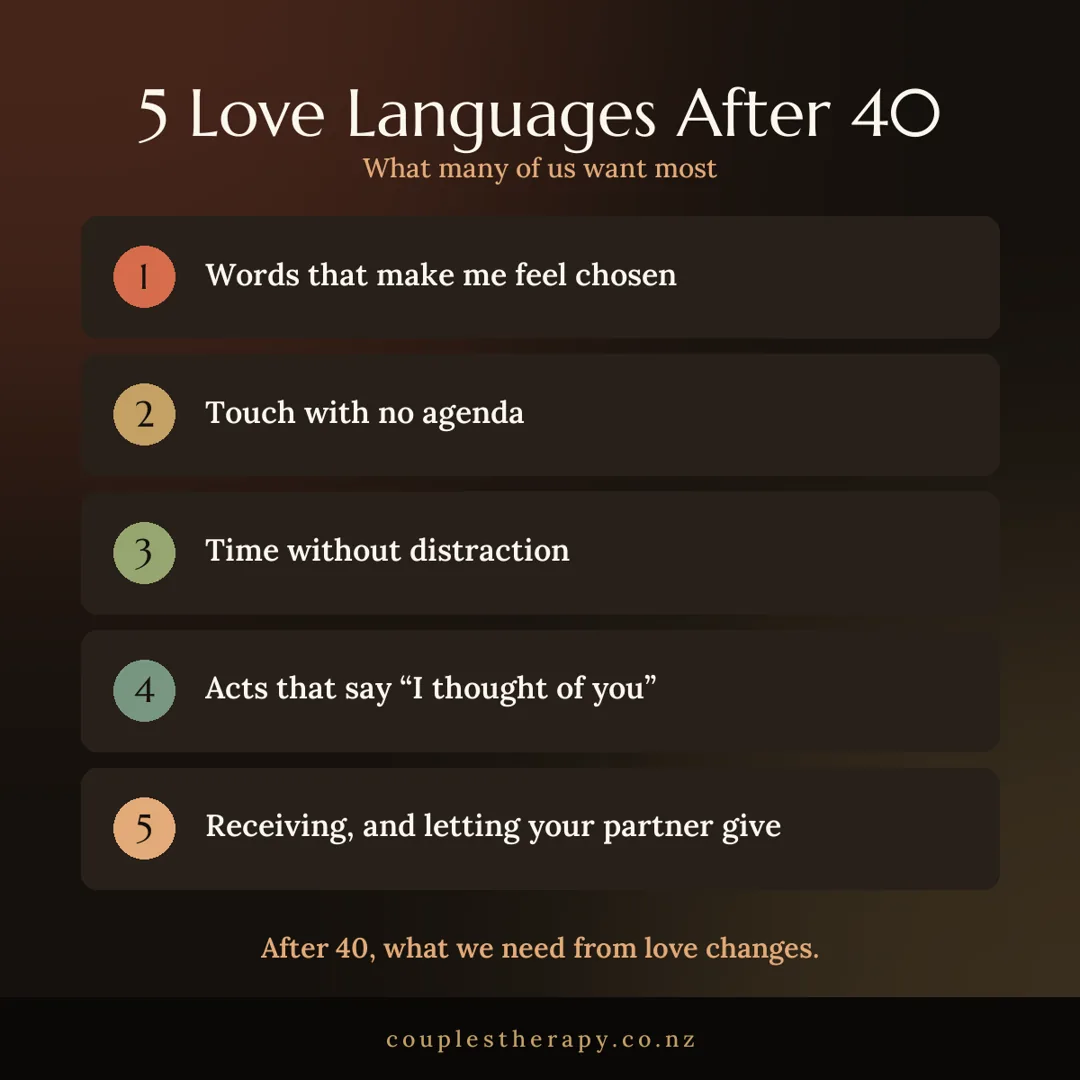
- Five love languages. Words of affirmation, quality time, receiving gifts, acts of service and physical touch.
- A primary language. Chapman says each of us has one main language and a secondary one, and the book has questions to help you find yours.
- We give what we want. People tend to show love in the way they’d like to receive it, then feel hurt when it isn’t noticed.
- Listen to complaints. What your partner complains about and asks for most often tells you their language.
- Love is action. Once you know what makes your partner feel loved, you do it, even when it doesn’t come naturally to you.
What I like about it as a couples therapist
As a couples therapist, what I like about this book is that it gets you curious about your partner again.
Many of us assume our partner wants what we want.
So one of you keeps the house running and wonders why it isn’t felt as love. The other keeps asking for an hour of undivided attention and feels like a nag.
Does this sound like the two of you?
The book is short and friendly, and a partner who would never open a therapy book will often read this one. It gives you an easy way into a conversation about what each of you needs.
If you’d like some prompts for that conversation, try my questions to build emotional intimacy.
I also like the idea that love is something you do. Waiting until you feel like it keeps a lot of couples stuck.
What other readers and reviewers say
For this 5 Love Languages review I looked at what researchers and one experienced therapist have said recently.
Psychologist Emily Impett and her colleagues reviewed ten studies on love languages.
As the University of Toronto reported in 2024, none of them supported Chapman’s three main claims: that we each have a primary language, that there are exactly five, and that couples are happier when they match.
Impett also pointed out that the idea came from a narrow group of religious, traditional couples.
Anna Mattson covered the same paper for Live Science.
Co-author Gideon Park told her, “you cannot put people into arbitrary boxes”.
Psychologist Paul Eastwick added that using the languages will generally make your partner feel appreciated, though there’s no evidence for matching.
Michele Weiner-Davis, a therapist who has worked with couples for four decades, defended the book in Psychology Today.
She agrees there are more than five ways to feel loved.
Her point is that learning your partner feels loved differently from you is “a simple but powerful idea”, and that she has seen it change relationships.
What it doesn’t do
I think both sides are right.
The quiz that puts you in one box is the weakest part. Most of us want all five, in different amounts at different times.
Don’t let that’s not my love language become a reason to stop offering something your partner needs.
The book also doesn’t explain why you stopped giving in the first place.
When there’s resentment or old hurt between you, you won’t feel like doing loving things, and a list won’t fix that.
I’ve written about how to heal resentment in your marriage for that reason.
It can turn into a trade as well. I did your language, so now you owe me mine is scorekeeping.
And it was written by a pastor for traditional married couples, so some of the examples may not fit your life.
Who should read it
Read it if you’re both trying and it’s somehow not landing.
Read it if one of you isn’t keen on relationship books and you need an easy place to start.
Treat the five as a menu and skip the test. Ask each other which ones you’ve been missing lately.
Then build them into ordinary days.
My post on habits that keep intimacy alive has ideas for that.
If you feel too far apart for small things to help, you’ll need to repair the hurt first.
That’s the work I do in couples therapy.
My 5 Love Languages review in short: a useful first conversation, and only a first step.

Where to buy it
You can find The 5 Love Languages in most bookshops and libraries. Here are three places to buy it:
- Mighty Ape (New Zealand)
- Paper Plus (New Zealand)
- Amazon
Prefer to listen? Look for the audiobook on Audible or Spotify.
Want support with this in your own relationship? Start with a free discovery call and we’ll talk about what would help the two of you most.