One of you needs more closeness.
The other needs more space, and this book gives you a simple way to understand why.
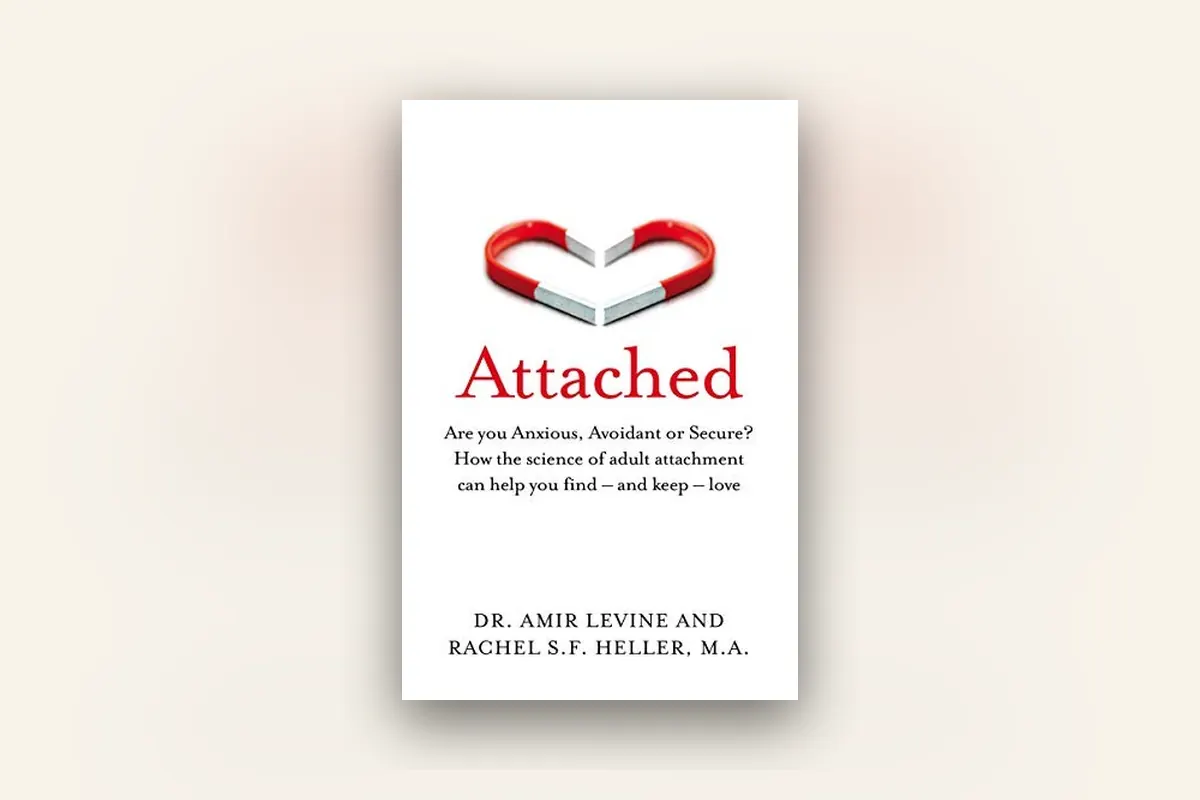
In this Attached review I’ll cover what Amir Levine and Rachel Heller say, what I like as a therapist, and where I’d be careful.
In one line: it helps you name your attachment style and your partner’s, so you stop taking each other’s reactions so personally.
It’s also the book that sent attachment styles all over social media.
That has been a mixed blessing, and I’ll come to it.
What the book is about
Attached was first published in 2010. Amir Levine is a psychiatrist and neuroscientist, and Rachel Heller is a psychologist.
It’s about 300 pages and has sold more than two million copies.
The book takes attachment theory, which began with John Bowlby’s work on children and their caregivers, and applies it to adult love. The authors say we’re built to pair up, and that a secure partnership is good for our emotional and physical health.
From there it sorts people into styles, with questionnaires to help you find yours and your partner’s.
The main ideas
- Three attachment styles. Secure people are comfortable with closeness. Anxious people worry about whether their love is returned. Avoidant people keep closeness to a minimum.
- The dependency paradox. The more reliably your partner is there for you, the freer you are to go out into the world on your own.
- Needs are normal. Wanting reassurance from your partner is part of how we’re wired, and partners are responsible for each other’s emotional wellbeing.
- Anxious meets avoidant. The book warns about the emotional cost when two people with very different needs for intimacy get together.
- Say it plainly. It teaches you to state what you need directly instead of hinting or acting out.
- Styles can change. The authors say change is possible at any age, and that a secure partner helps.

What I like about it as a couples therapist
As a couples therapist, what I like about this book is that it makes needing your partner normal and healthy.
A lot of us grew up believing we should be able to manage on our own, and that wanting reassurance is needy.
The dependency paradox turns that around.
It fits closely with Emotionally Focused Therapy (EFT), which I’m trained in and which is built on the same attachment science.
If you read Attached first, the idea of a pursuing partner and a withdrawing partner will already make sense to you.
Do you recognise yourselves in that?
I’ve written about that pattern in the anxious and avoidant dance.
If old hurts are part of it, read how to heal attachment wounds together.
It’s also easy to read.
You can finish it in a weekend and come away with words for things you’ve felt for years.
What other readers and reviewers say
For this Attached review I read two reviews from when the book came out and one recent article. Publishers Weekly called it solidly researched and intriguing, and noted how full it is of tips, questionnaires and case studies.
Kirkus Reviews liked how clearly the styles are explained and summed it up as “A practical, enjoyable guide to forming rewarding romantic relationships.”
The more critical view comes from Rich Juzwiak, writing in Slate in April 2026.
He describes how influencers turned the styles into fixed labels, almost like star signs, and how avoidant people became the villains.
Levine told him that avoidants “get kind of a bad rap” and that the research hasn’t been fair to them.
Juzwiak also reports that Levine’s follow-up book, Secure, takes more care.
It treats styles as a spectrum that can differ from one relationship to another, and it warns readers against jumping to conclusions about a partner’s style.
What it doesn’t do
The first limit is the one Levine has named himself. The book can leave you thinking the avoidant partner is the problem.
I don’t see it that way.
Each of you is protecting yourself the best way you know, and each of you sets the other off.
The second limit is that a lot of the book is aimed at people who are dating and choosing a partner.
If you’ve been together twenty years, advice about picking someone secure is no use to you. You need to know how to become safer for each other, and the book has much less on that.
And please don’t hand your partner a diagnosis.
Saying you’re avoidant starts an argument. Saying I get scared when you go silent starts a conversation.

Who should read it
Read it if the closeness and space pattern is familiar and you’ve never had words for it.
It’s a good first book for someone new to all this, and a good one for a partner who likes a clear, science-based explanation.
Hold the labels lightly.
Use them to understand each other, then move on to what each of you needs.
If you’d like to go further, I’ve written about how to feel emotionally safe together again, and couples therapy is where you practise it with support.
That’s my Attached review: a helpful start, as long as you use it to understand each other and leave the labels behind.
Where to buy it
You can find Attached in most bookshops and libraries. Here are three places to buy it:
- Mighty Ape (New Zealand)
- Paper Plus (New Zealand)
- Amazon
Prefer to listen? Look for the audiobook on Audible or Spotify.
Want support with this in your own relationship? Start with a free discovery call and we’ll talk about what would help the two of you most.