Most couples think their problem is communication.
John Gottman’s research points somewhere plainer: how much you like each other day to day.
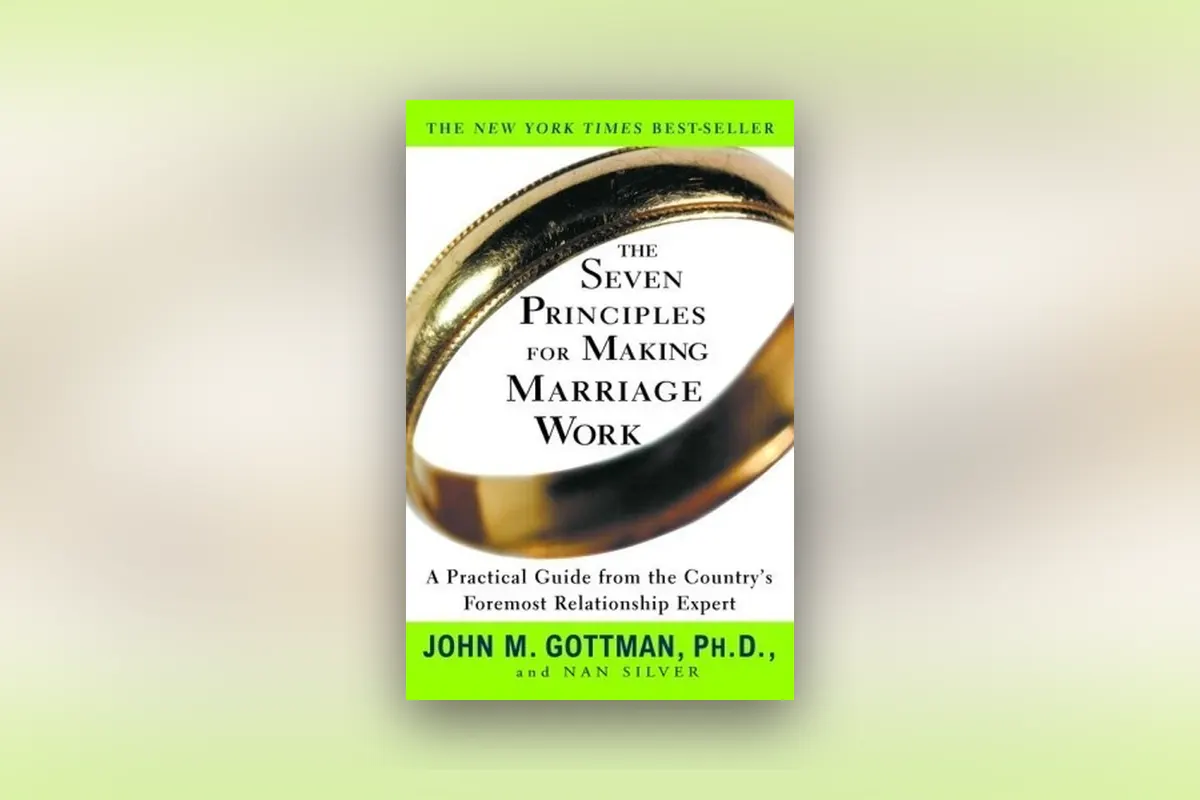
In this Seven Principles for Making Marriage Work review I’ll go through what the book says, what I think of it as a therapist, and what its critics say.
In one line: it gives the two of you everyday habits and exercises that build goodwill, so your arguments do less damage.
It’s a workbook as much as a book.
You’re meant to do it, not only read it.
What the book is about
The Seven Principles for Making Marriage Work was first published in 1999 by psychologist John Gottman with writer Nan Silver.
A revised edition came out in 2015 and runs to about 295 pages.
It’s based on Gottman’s years of observing couples at his University of Washington research lab, nicknamed the Love Lab. Couples were videotaped and monitored while they talked and argued, then followed up years later.
His conclusion is that happily married couples aren’t smarter or better at communicating than anyone else. They have a strong friendship, and it stops their negative feelings about each other from swamping the positive ones.
The book is full of quizzes, questionnaires and exercises for you to do together.
The main ideas
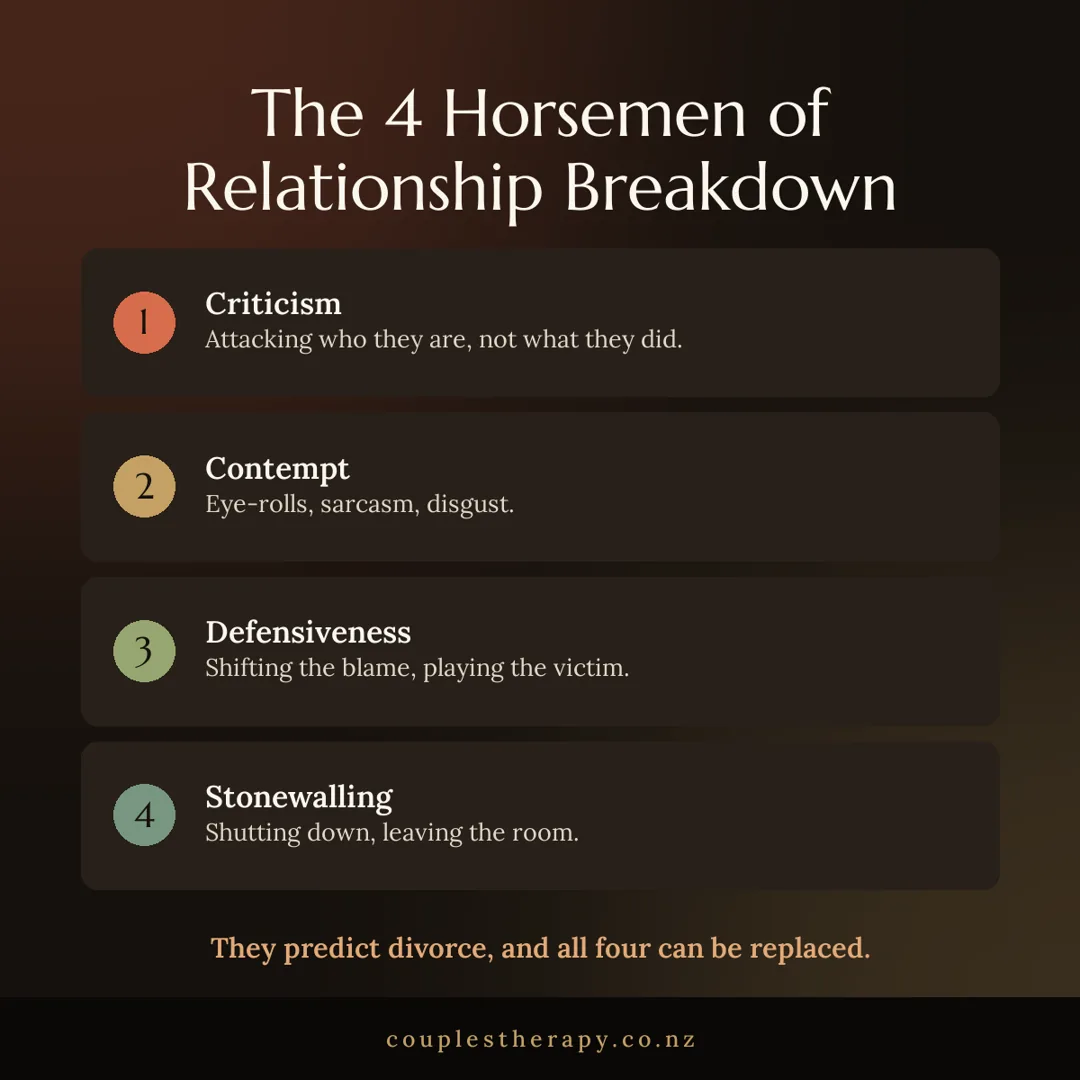
- The Four Horsemen. Criticism, contempt, defensiveness and stonewalling are the warning signs. Gottman names contempt as the most damaging.
- Love maps. How well you know your partner’s inner world: their worries, their hopes, what their day is like. The book has a question game for updating yours.
- Fondness and admiration. Noticing what you appreciate about your partner and saying it out loud.
- Turning toward. Making time to listen and respond in small daily moments instead of brushing each other off.
- Accepting influence. Sharing decisions and letting your partner’s view change yours.
- Two kinds of problems. Some can be solved with a softer start, repair attempts, calming yourself and compromise. Others keep coming back, and the work is to get out of gridlock and build a shared sense of meaning.
What I like about it as a couples therapist
As a couples therapist, what I like about this book is how practical it is. You can open it tonight and do an exercise together.
I also like where it puts the attention.
Most of us want to fix how we argue, and Gottman says start with the friendship.
Do you know what’s worrying your partner this week?
His point makes sense to me. When goodwill is high, a clumsy sentence gets forgiven. When it’s low, even a careful one starts a fight.
I’ve written about how well you know your partner and why that kind of listening counts for so much.
The Four Horsemen are useful because they give you both a shared vocabulary. It’s easier to say that was contempt, let me try again than to argue about who started it.
His advice on calming yourself before you carry on is sound too.
If your arguments escalate fast, read my post on what to do when you feel flooded.
What other readers and reviewers say
For this Seven Principles for Making Marriage Work review I read three other takes, and they’re more mixed than the book’s reputation suggests.
Psychiatrist Scott Alexander reviewed it on Slate Star Codex in 2020.
He praised the worksheets and games and summed the book up as “The secret to a happy marriage is that you should like your spouse.”
But he was scathing about Gottman’s famous claim to predict divorce with 91 percent accuracy, and ended unconvinced that anyone knows what makes marriages work.
Journalist Laurie Abraham made the same point in Slate in 2010.
She wrote, “Undeniably, Gottman has made enormous contributions to the study of marriage.”
Then she explained that his divorce formulas were built after the couples’ outcomes were already known and weren’t tested on a fresh group of couples.
Dr Tyler Rich, a marriage and family therapist at Richer Life Counseling, likes the exercises and the simple picture of what to do and what to avoid.
His complaint is that the amount of research makes it harder going than it needs to be.
What it doesn’t do
So take the prediction numbers lightly. Please don’t use the Four Horsemen to decide your marriage is doomed.
They’re habits, and habits can change.
The bigger limit, from my point of view, is that the book tells you what to do and says less about why you can’t do it when you’re hurt.
Most people know they shouldn’t criticise. They do it anyway when they feel alone or unwanted, and a quiz won’t reach that.
That’s where an attachment based approach such as Emotionally Focused Therapy (EFT) goes further. I explain the pattern underneath in why couples argue.
The exercises also need both of you.
If one partner does the homework and the other won’t, it can add to the resentment.
Who should read it
Read it if you’re basically okay and feel yourselves drifting or bickering more.
It’s good for newly committed couples who want to set up habits early, and for anyone who likes structure and a clear to do list.
Is one of you a reader and the other not?
The quizzes are short, so you can do one over a cup of tea.
If there’s been a betrayal, or you’ve stopped talking about anything that counts, you’ll probably need more than a workbook.
Here is my Seven Principles for Making Marriage Work review in one sentence.
Use it for the daily habits, and skip the statistics.

Where to buy it
You can find The Seven Principles for Making Marriage Work in most bookshops and libraries. Here are three places to buy it:
- Mighty Ape (New Zealand)
- Paper Plus (New Zealand)
- Amazon
Prefer to listen? Look for the audiobook on Audible or Spotify.
Want support with this in your own relationship? Start with a free discovery call and we’ll talk about what would help the two of you most.