He’s twenty minutes late and hasn’t texted.
In your head, you know it’s nothing. Traffic, or a flat phone.
But your chest tightens anyway, and your stomach drops. By the time he walks in, you’re cold, or sharp, or close to tears.
He’s confused. “It was twenty minutes.”
And somewhere inside, you know it wasn’t about tonight at all. It was about a different man, a different marriage, a different decade.
If you’ve found new love after 40, this might sound familiar.
It’s one of the most common things that happens to people in a second chance at love.
And it’s one of the most fixable.
You didn’t arrive empty handed
When we start a new relationship later in life, we don’t arrive as blank slates.
We bring a whole history with us.
We bring our ways of coping.
If you were the one who pushed to be heard in your last relationship, you’ll still have that reflex. If you were the one who went silent to keep the peace, you’ll still have that one too.
We bring old hurts. Betrayal, years of feeling unseen, the loneliness at the end. Those experiences shaped your nervous system. They don’t disappear because the new person is lovely.
We bring stories.
- “Men always leave.”
- “Women are never satisfied.”
- “If I show what I need, I’ll be rejected.”
Do you recognise any of these?
None of this is a flaw. It’s simply what it means to have lived.
Why the old patterns follow us
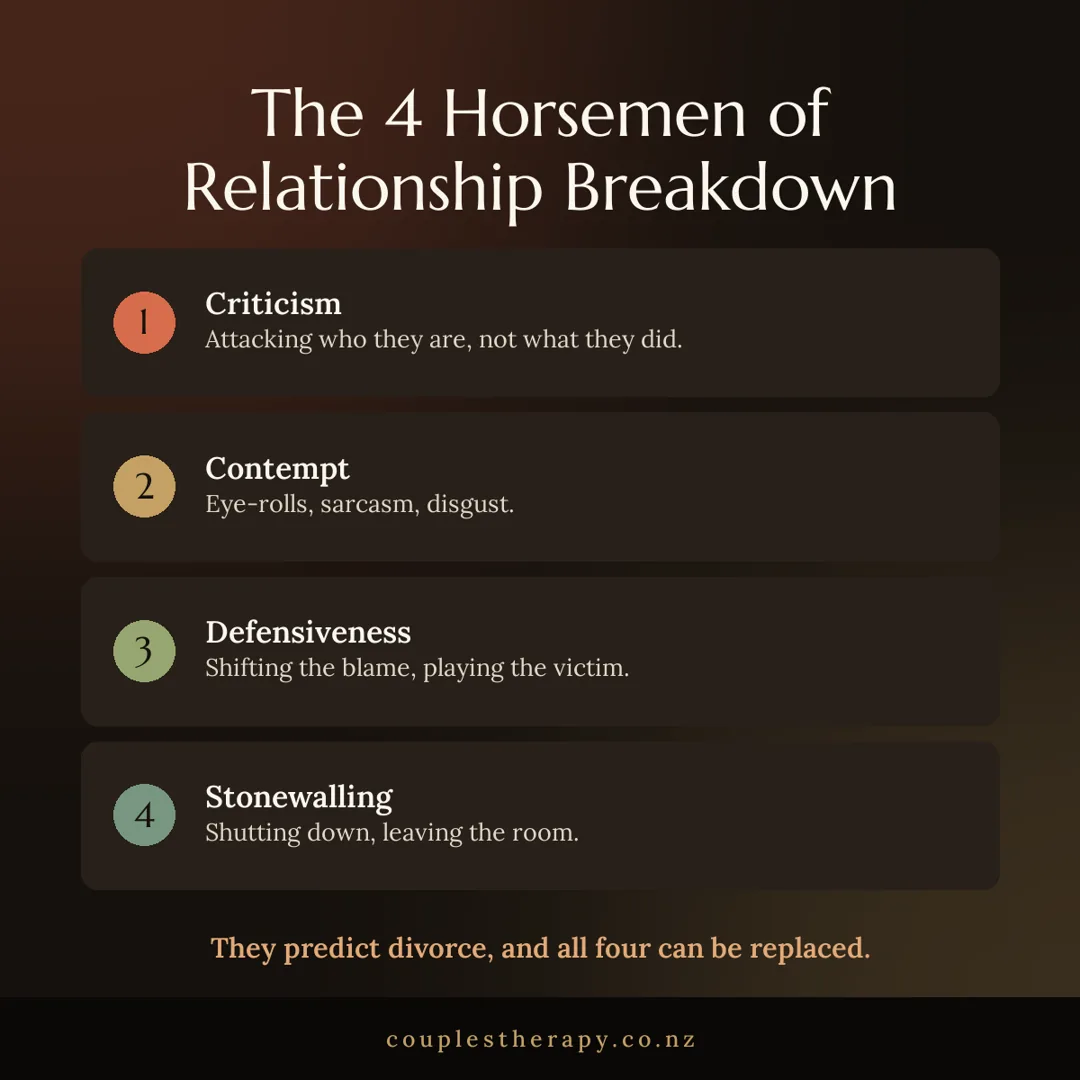
In Emotionally Focused Therapy (EFT), I talk about the dance couples do when they feel disconnected.
One of you reaches and the other retreats, and each move sets off the other.
Your part in that dance was learned, often in childhood and then reinforced in your first long relationship.
So when you start again, your steps come with you. A new partner, the same moves.
Sometimes the roles even swap.
Someone who was always the one reaching finds a partner who reaches even harder, and suddenly they’re the one pulling back.
It can be very confusing: “I never used to be like this.”
You know what I mean, right?
Try this: each of you finish the sentence, “When I feel disconnected, I tend to…” Share your answers without judgement.
The new partner pays for old pain
Here’s what happens if those patterns go unnoticed.
A small moment that looks a bit like the past sets off a big reaction. Your new partner, who’s done nothing wrong, feels like they’re on trial for crimes they didn’t commit.
They start walking on eggshells, get defensive or pull away.
And a relationship that started so well can slip into the same cycle as the last one.
What the research says about second relationships
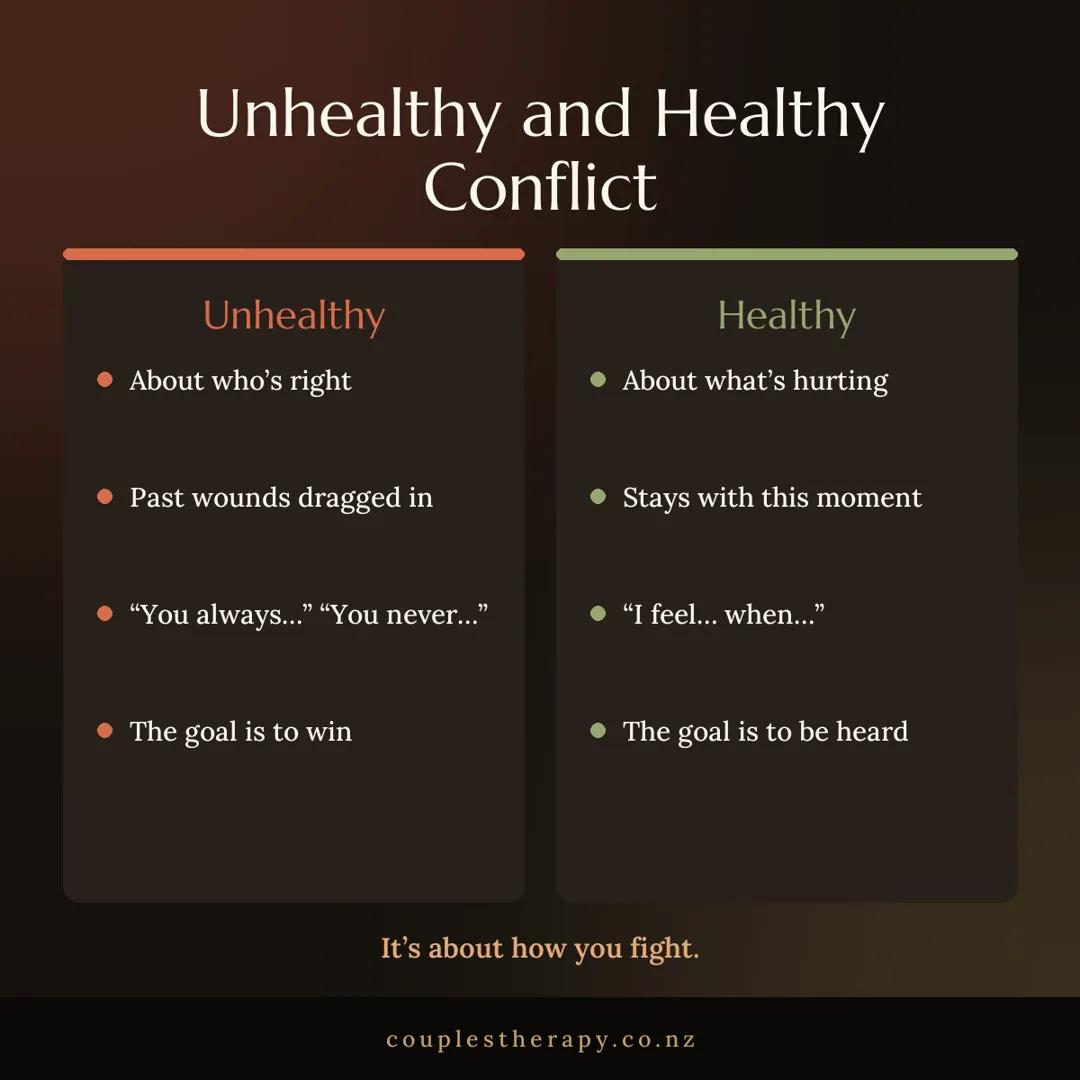
You’ll see very different statistics online about second marriages. Some studies suggest they’re more likely to end than first marriages, others suggest they do better. The numbers depend on the country and how they’re counted.
What’s more useful is what we know helps and what makes things harder.
What makes it harder:
- Blending families
- Money and obligations from the past
- Unresolved patterns
- Old hurts
- Sometimes a quicker exit when things get tough, because you know you can survive it
What helps:
- Being older and clearer about what you want
- Gratitude for a second chance
- Doing some work together on purpose
Couples who learn relationship skills, talk about the hard stuff early and get support tend to do much better.
How to build it differently this time
Name your old patterns early. “In my last marriage, I learned that if I didn’t push, nothing changed. So I might push harder than you’re used to. It’s not about you.”
Name your old wounds. “When you’re late without texting, something old gets triggered for me. I know you’re not him. But my body doesn’t, yet.”
Respond to each other’s wounds with care. If your partner shares an old hurt, don’t argue the facts. Say, “That makes sense. I’m here.” Every time you do, you help rewrite the wound.
Grieve what ended. Even if leaving was right, there’s often loss to process, and unfinished grief leaks into new love.
Talk about the practical things. Money, children, exes, where you’ll live. These are easier to discuss while things are warm and new.
Keep desire on purpose. New love after 40 can bring desire roaring back.
Talk about what you love and what’s changed in your body. Talk about how you’ll keep it alive when the novelty fades.
Choose, don’t slide. The first time round, many of us slid into the big steps of life. This time you can decide, together, what you want this relationship to be.
Try this: each of you finish two sentences. “Something I learned in my last relationship that I want to keep is…” and “Something I want to leave behind is…”
You’re not starting from scratch
Here’s the hopeful part.
You’re not starting from nothing. You’re starting from experience.
You know what doesn’t work. You know what you need. You know what you won’t accept again.
The trick is to use your wisdom without being run by your wounds.
A second chance at love is a brave thing.
With some awareness and a bit of help, it can be the best relationship of your life.
Want to understand what’s happening between the two of you? Come to Reignite Your Love, a 3 hour workshop in Auckland about the emotional and sexual cycle and how to step out of it. Or start with a free discovery call.