Sex can become a worry and feel stressful.
If sex has become a worry in your relationship, this is the first book I’d hand you.
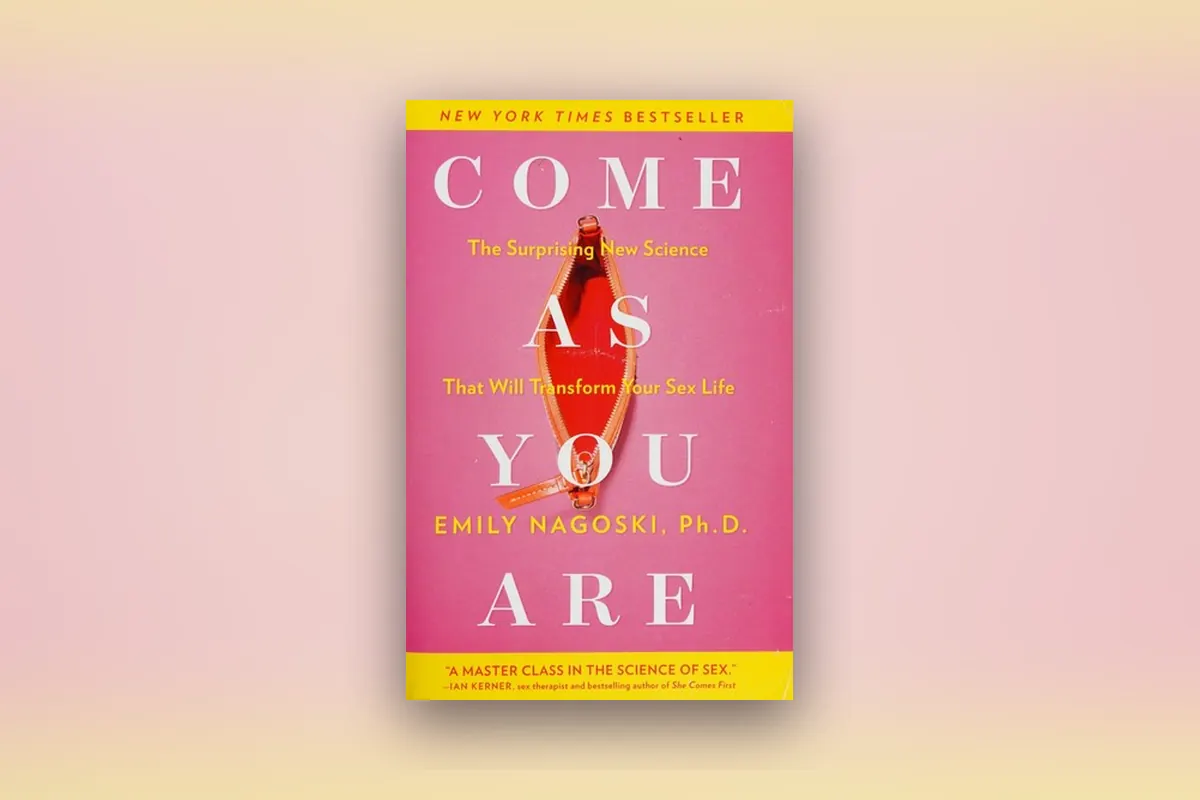
In this Come As You Are review I’ll tell you what Emily Nagoski’s book says and where it stops being enough for a couple.
The short version: it explains why desire shows up so differently in different people, and it does that with research and without blame.
It’s written for women. I think their partners should read it too.
What the book is about
Emily Nagoski is a sex educator with a PhD in health behaviour from Indiana University, and she interned at the Kinsey Institute while she studied.
Come As You Are came out in 2015 with Simon & Schuster.
She revised and updated it in 2021, and that edition runs to about 450 pages.
Her argument is simple.
Women’s sexuality varies enormously from one woman to the next, and almost all of that variation is normal.
Many women who think they’re broken have a body and a brain that are responding sensibly to the life they’re living. The science chapters alternate with stories of women and their partners, and there are worksheets to fill in along the way.
The main ideas
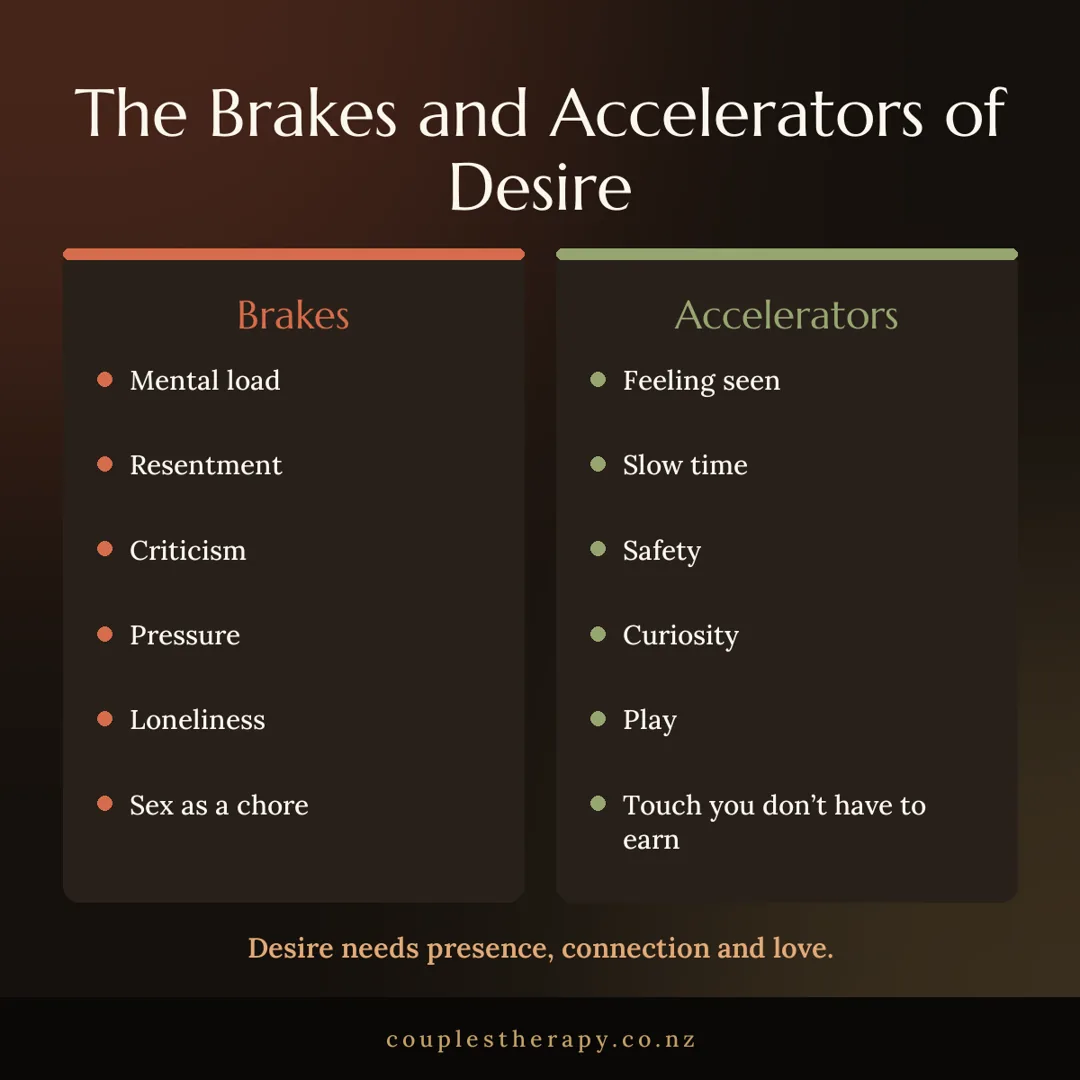
- Brakes and accelerator. Your brain has one system that notices sexual cues and speeds you up, and another that notices reasons to stop and slows you down. This is the dual control model, built on research by Erick Janssen and John Bancroft. The two systems aren’t simple opposites, so adding more turn-ons won’t help much while the brake is still on.
- Context changes everything. The same touch can feel wonderful one day and irritating the next. Your state of mind and the state of your relationship both shape how your body responds.
- Responsive desire. Some people want sex out of nowhere. For others, desire arrives after things have already started to feel good. Nagoski describes both styles, and neither one is a fault.
- Arousal non-concordance. What the genitals do and what a person feels don’t always match. A physical response doesn’t tell you what someone wants.
- Pleasure is the measure. How often you have sex tells you very little. Whether you like the sex you’re having tells you a lot.
- Unlearning old messages. Most of us picked up harmful ideas about sex and about our bodies. Nagoski shows you how to let them go.
What I like about it as a couples therapist
As a couples and sex therapist, what I like most is that this book takes the blame out of desire differences.
When one of you wants sex more than the other, it’s easy to decide that somebody is the problem.
One of you feels rejected and the other feels pressured.
Nagoski gives you a shared language instead.
You can ask each other what’s on the brake tonight, and that’s a far kinder question than asking what’s wrong with you.
I also like that she’s honest about effort.
She makes no promise of fireworks, only that you’ll understand how your sexual response works.
I think understanding comes first when a couple wants their sex life to change.
Does this sound like the two of you?
If it does, my post on mismatched libido and the sexual cycle couples get stuck in looks at the same problem from the couple’s side.
What other readers and reviewers say
The readers I found while writing this Come As You Are review were close to unanimous.
Kara Babcock, writing at Kara.Reviews, gave it four stars out of five and praised the way Nagoski turns academic research into something anyone can use. In Babcock’s words, “it is relentlessly grounded in a scientific mindset”.
Her criticisms were that the book gets asexuality wrong and that it’s dense, a book to read one chapter at a time.
Claudia, on the staff at the New Zealand bookshop Scorpio Books, says the focus on women shouldn’t put other readers off, and she likes how the case studies break up the science.
Her verdict: “Read it sooner rather than later!” She offers no criticism.
The team at Embrace Sexual Wellness, a therapy practice in Chicago, find it funny and sex-positive.
They single out the worksheets as a strength and recommend it to couples and clinicians as well as to women.
They don’t list any weaknesses.
What it doesn’t do
It’s a book about women’s sexuality, so men’s desire gets very little space.
If the lower-desire partner in your relationship is a man, start with my post on low sexual desire in him or in her.
It’s also written to one reader at a time. It explains each of you to yourself.
It doesn’t show you how to talk to each other when the subject is loaded, and it can’t see the pattern the two of you have built around sex.
And it’s long. Take Babcock’s advice and read it slowly.
Who should read it
Read it if you’re a woman who has wondered whether your desire is normal. Read it if you love a woman and you’ve been taking her lack of interest personally.
It works well when you both read it and talk about one chapter at a time.
If desire has dropped in your forties or fifties, my post on how to get your desire back in midlife goes well alongside it.
So the verdict of this Come As You Are review is a clear yes. If you’ve read it and you’re still stuck, that’s common. It’s what couples therapy is for.

Where to buy it
You can find Come As You Are in most bookshops and libraries. Here are three places to buy it:
- Mighty Ape (New Zealand)
- Paper Plus (New Zealand)
- Amazon
Prefer to listen? Look for the audiobook on Audible or Spotify.
Want support with this in your own relationship? Start with a free discovery call and we’ll talk about what would help the two of you most.