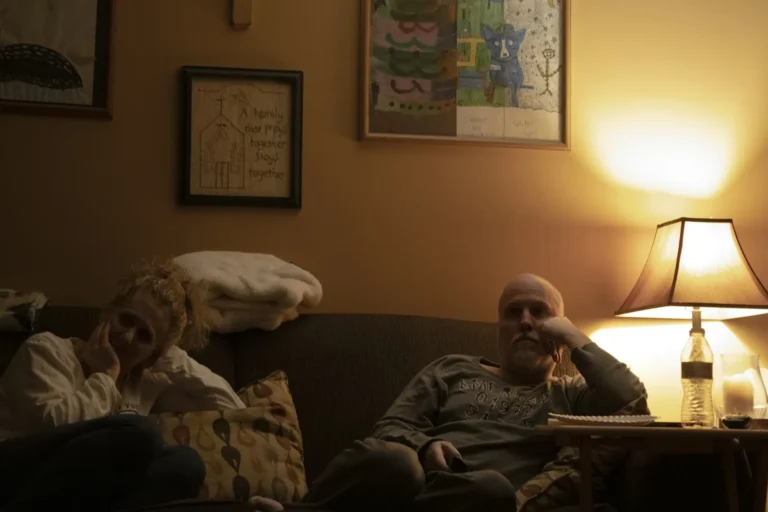
Low desire brings a lot of shame.
“I don’t know what’s wrong with me. I love him. I just don’t want sex.”
“I feel like a failure as a man. She wants it, and I just… don’t.” Two different people. Two very different kinds of shame. The same experience underneath.
Low sexual desire is one of the most common things couples over 40 struggle with, and one of the least talked about.
Most people assume it’s a woman’s problem. It isn’t.
Men experience it too, and they often feel even more alone with it, because it doesn’t fit the story they’ve been told about what men are like.
So this post is for both of you.
Whoever has the lower desire, and whoever is living alongside it.
First, what low sexual desire isn’t
Low desire isn’t a verdict on your relationship. It isn’t proof you’ve stopped loving each other. And it isn’t a character flaw.
It’s also not necessarily a problem at all.
Some couples have sex rarely and are perfectly happy with that.
Low desire becomes a problem when it causes distress: when one or both of you feel hurt, guilty, lonely or stuck.
If that’s you, read on.
Desire has brakes and accelerators
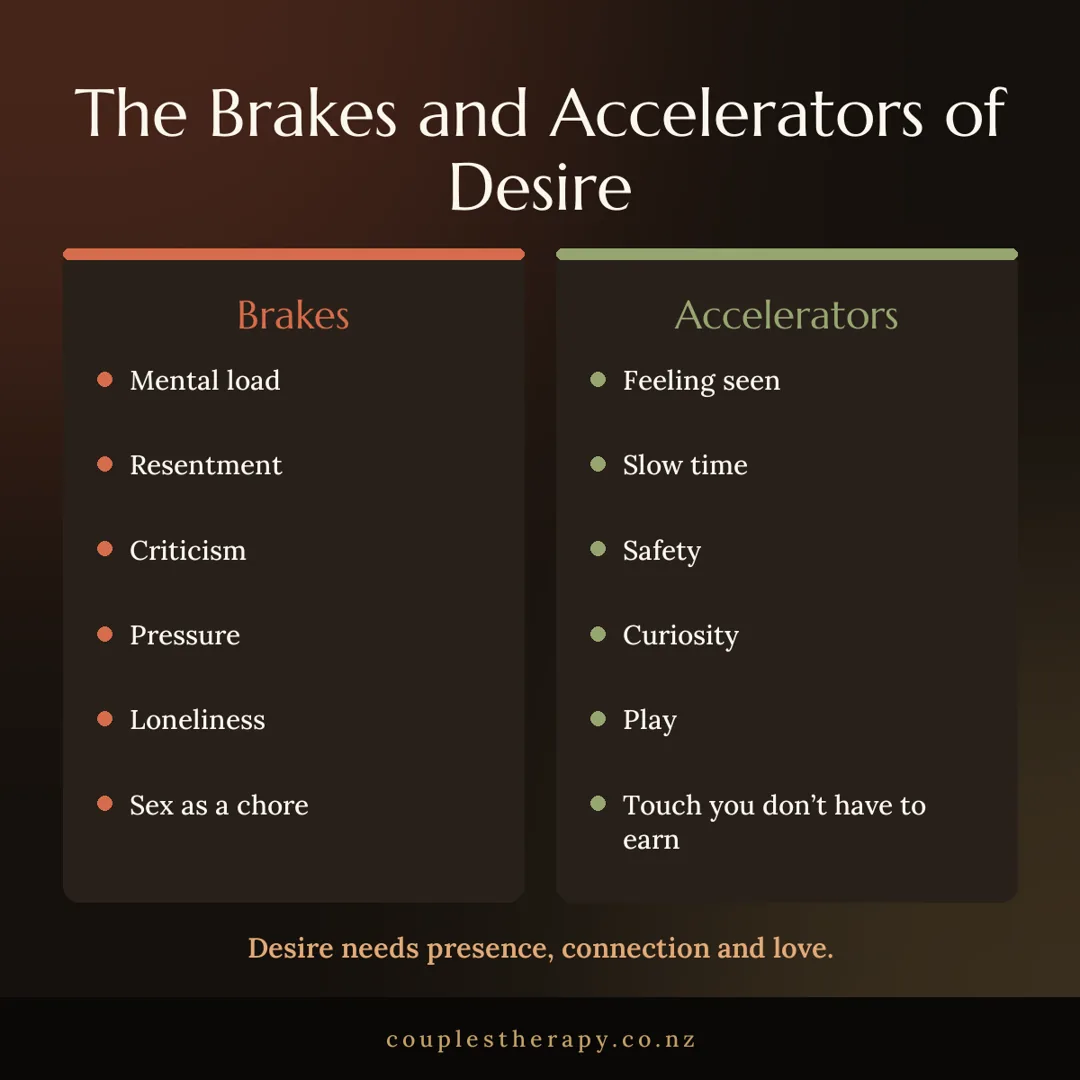
One of the most helpful ideas in sex therapy is that desire works like a car with two pedals. Sex educator Emily Nagoski made this idea popular, building on research into what’s called the dual control model.
The accelerator responds to everything that turns you on: touch, attraction, novelty, feeling desired, feeling close.
The brakes respond to everything that turns you off: stress, exhaustion, worry, pain, feeling pressured, feeling judged, resentment.
Here’s the key.
For many people, low desire isn’t about a weak accelerator. It’s about the brakes being pressed hard.
You can press the accelerator all you like, but if the handbrake is on, the car isn’t going anywhere.
Try this: each of you writes two lists, what turns you off (your brakes) and what turns you on (your accelerators). Be honest and specific. Then swap and read each other’s with curiosity.
Common brakes for women after 40
Every woman is different, but some brakes come up again and again.
The mental load. Running the household in your head: appointments, school notices, birthdays, groceries, ageing parents. It’s very hard to feel sexy while you’re mentally reorganising the week.
Exhaustion. Desire needs energy, and bad sleep, night sweats and long days don’t leave much.
Menopause and perimenopause. Dryness, discomfort, mood changes, changes in arousal. If sex hurts, your body will put the brakes on to protect you.
Body image. Feeling less attractive as your body changes.
Feeling unseen. Not feeling noticed, appreciated or desired outside the bedroom.
Touch that always means sex. Every hug becomes an opening move. So many women stop welcoming touch at all.
Sex that hasn’t been very good. If sex has rarely been pleasurable for you, it makes sense not to want it.
Do you recognise any of these?
Common brakes for men after 40
Men’s brakes are often hidden, because men are less likely to talk about them.
Stress and pressure. Many men carry work, money and providing without saying anything.
Performance anxiety. Worry about erections, about lasting, about pleasing their partner. Erections often become less predictable after 40, and the fear of failing can shut desire down before it starts.
Feeling criticised. If a man feels he can’t do anything right, it’s hard to feel desire. Desire and feeling like a failure don’t live well together.
Resentment. Unspoken hurts build up, and withdrawal from sex can become a silent way of keeping distance.
Health and hormones. Testosterone tends to decline gradually with age. Medications, weight, sleep apnoea, diabetes and heart health can all affect desire and erections.
Mood. Low mood and anxiety often show up first as loss of interest, including in sex.
Protecting his partner. Some caring men lose desire when their partner has pain or seems reluctant, almost as if their body is protecting her.
The relationship brakes
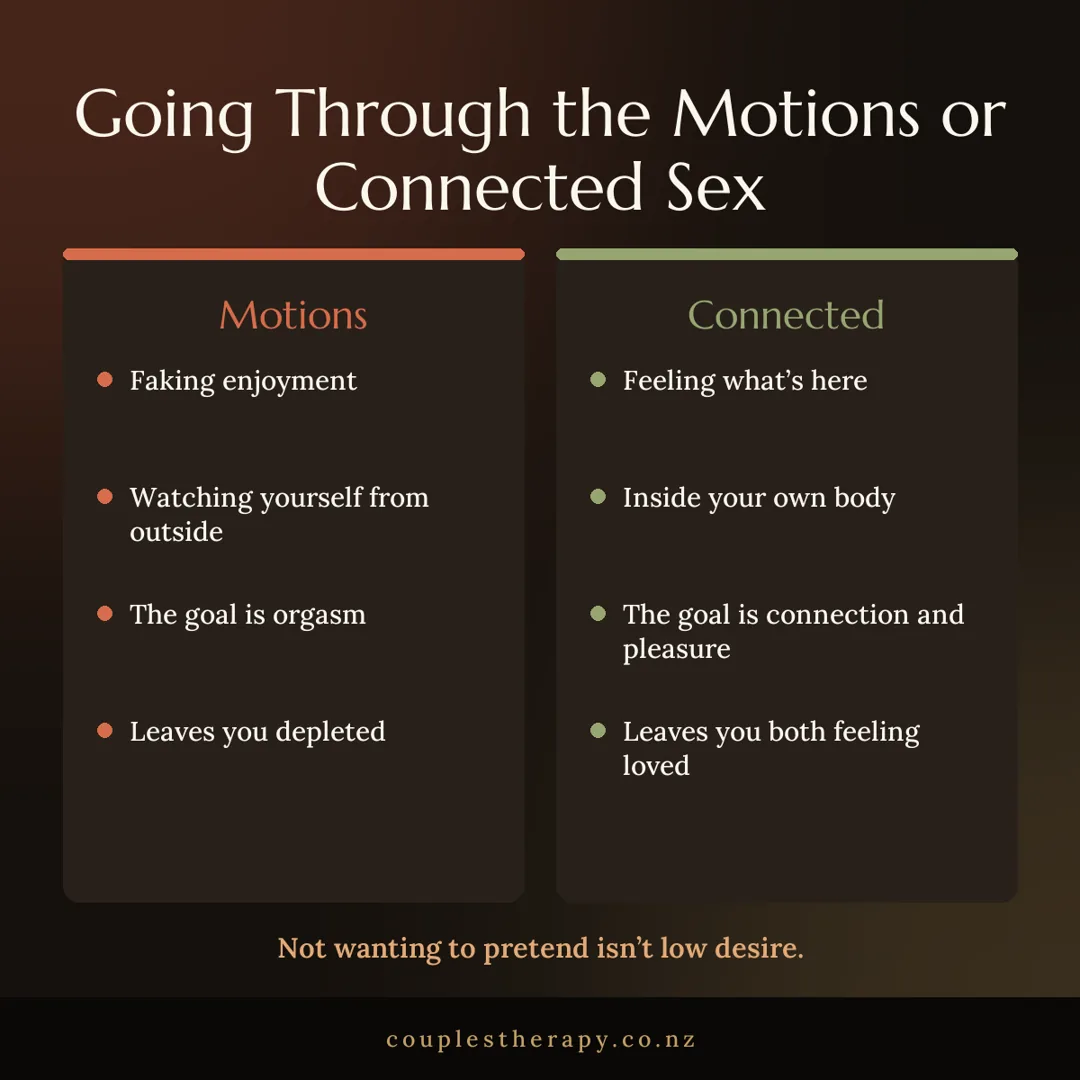
For both men and women, some of the strongest brakes come from the relationship itself.
- Feeling disconnected.
- Feeling lonely next to each other.
- Feeling criticised, or pressured, or unseen.
- Being stuck in the pursue and withdraw cycle in the kitchen, so the bedroom becomes another place of tension.
Does any of this sound familiar?
This is why low desire is so often a couple issue, not one person’s problem.
It lives between you as well as inside you.
If you’re the one with low desire
Be kind to yourself. Nothing is broken.
Get curious rather than ashamed. What are your brakes? What turns you on now, at this age, in this body, even a little?
See your GP if something physical might be involved. Pain, dryness, erection changes, low mood and hormones are all worth checking. Many are very treatable.
I’m not a doctor, and this isn’t medical advice. Please talk to your GP about anything physical.
Notice whether your desire is responsive.
Many people don’t feel like it until they start, once they’re relaxed and being touched. That’s not a lack of desire. It’s a different way desire works.
And tell your partner what’s happening for you, so they stop filling the gaps with stories about themselves.
If you’re the partner living alongside it
This can be very lonely.
Each no can feel like rejection, and it’s natural to feel hurt.
But try not to take it personally. Low desire is rarely about your attractiveness or your worth.
Pressure and hurt, however understandable, usually press the brakes harder.
Ask instead of push. “What’s it like for you? What makes it harder? What might help?” Listen without defending.
Look at your part in the brakes.
Are there ways you could ease the mental load, show more appreciation, offer touch without expectation?
And look after your own heart.
Talk to someone, if you need to. Your feelings are important too.
What helps you both
Take the pressure off. Agree on a time without sex. Fill it with affection that doesn’t lead anywhere.
Ease the brakes before pressing the accelerator. Sleep, help with the load, a calmer week, an honest talk about hurt.
Build the accelerators on purpose. Novelty, time away, flirting, compliments, slow touch.
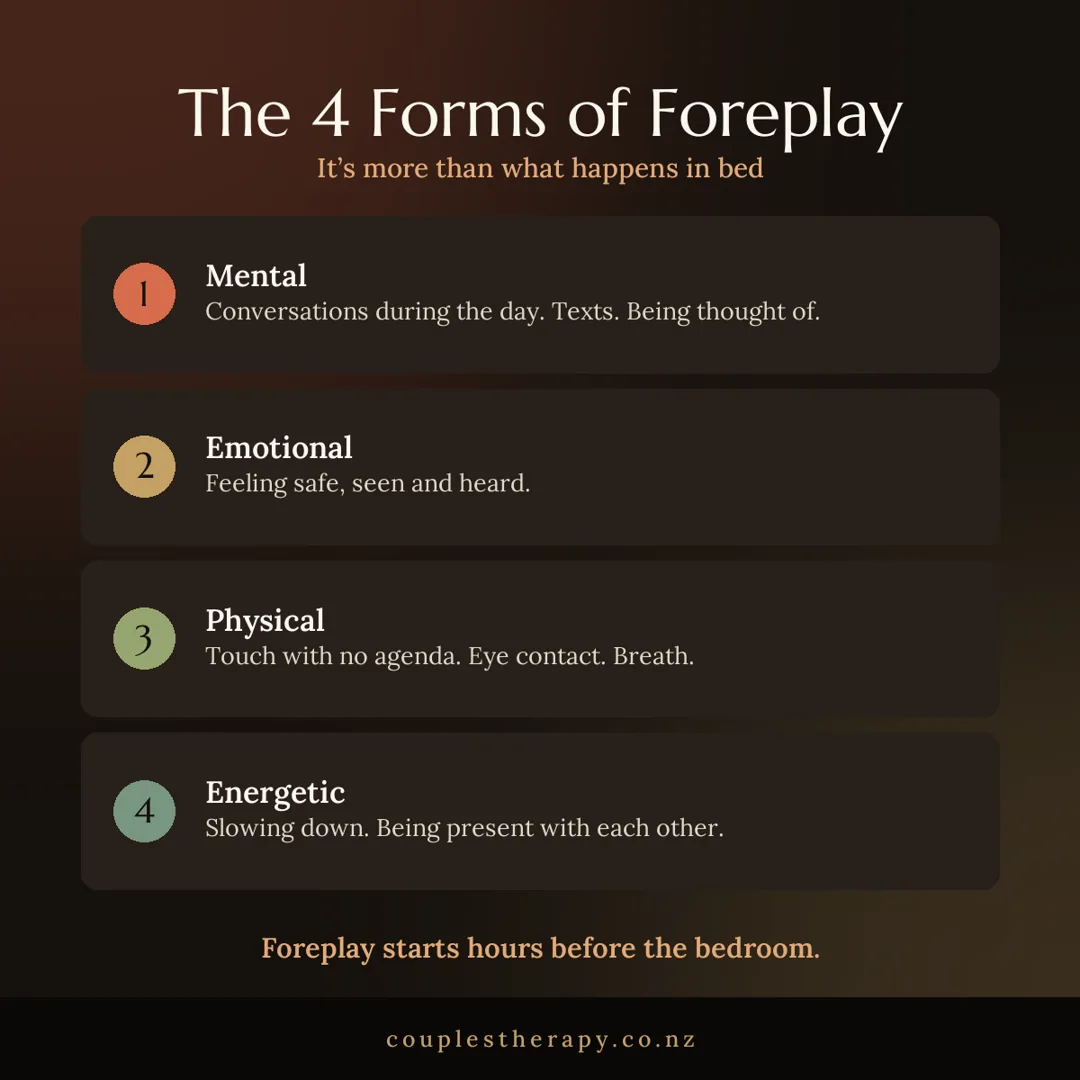
Redefine sex. It doesn’t have to mean intercourse every time.
Pleasure, presence and connection count.
Get support if you’re stuck. A sex therapist or couples therapist can help you untangle it together.
Desire can come back
Low desire isn’t a life sentence.
For many couples, once the brakes ease and the pressure goes, desire starts to return. Often slower and deeper than before.
Want to understand what’s happening between the two of you? Come to Reignite Your Love, a 3 hour workshop in Auckland about the emotional and sexual cycle and how to step out of it. Or start with a free discovery call.