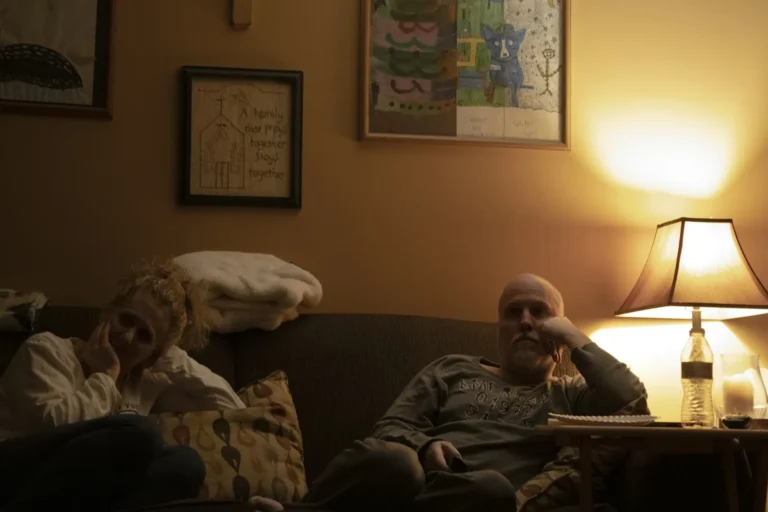
You may love your partner deeply.
You may trust who they are, and still feel your body pull away when they reach for you.
A hand on your thigh makes you irritated. A kiss feels like one more item on an already ridiculous to do list. Or sex happens, and afterwards you feel strangely absent from your own skin.
So, can trauma impact intimacy? Yes, absolutely.
You aren’t broken and neither is your relationship. Your nervous system remembers what happened to you, sometimes for many years.
With long term couples, I often see trauma mistaken for a libido problem or a communication problem. Partners start negotiating how often, researching supplements and scheduling date nights, and they wonder why none of it touches what’s actually happening.
Meanwhile, one of you feels rejected and the other feels pressured, ashamed or numb.
Before long, two people who once couldn’t keep their hands off each other are running a household together and avoiding the bedroom.
Does this sound familiar?
Trauma can affect your intimacy, and that can change with the right support.
How trauma can impact intimacy in a relationship
Trauma can be one catastrophic event, and it can be much more ordinary than that.
It includes childhood neglect, sexual violation, betrayal, coercion, a frightening birth, medical trauma, family violence, racism, loss, or years in a relationship where your emotional needs were dismissed.
Sometimes the event is obvious.
Sometimes it’s a lifetime of learning that closeness comes with a cost.
When your body has learned that connection can bring danger, humiliation, abandonment or loss of control, it starts to protect you.
That protection can look like:
- Shutting down during sex
- Avoiding touch
- People pleasing
- Needing total control
- Watching your partner’s mood very closely
- Finding fault at the exact moment they’re being tender
The response usually makes no logical sense.
It’s your survival wiring, still doing its job long after the danger has passed.
This is especially confusing in a loving marriage or committed partnership.
Your mind says, “I know I’m safe with them.” Yet your body still braces, freezes, or wants to run or fight.
Desire can’t grow when your body is on guard.
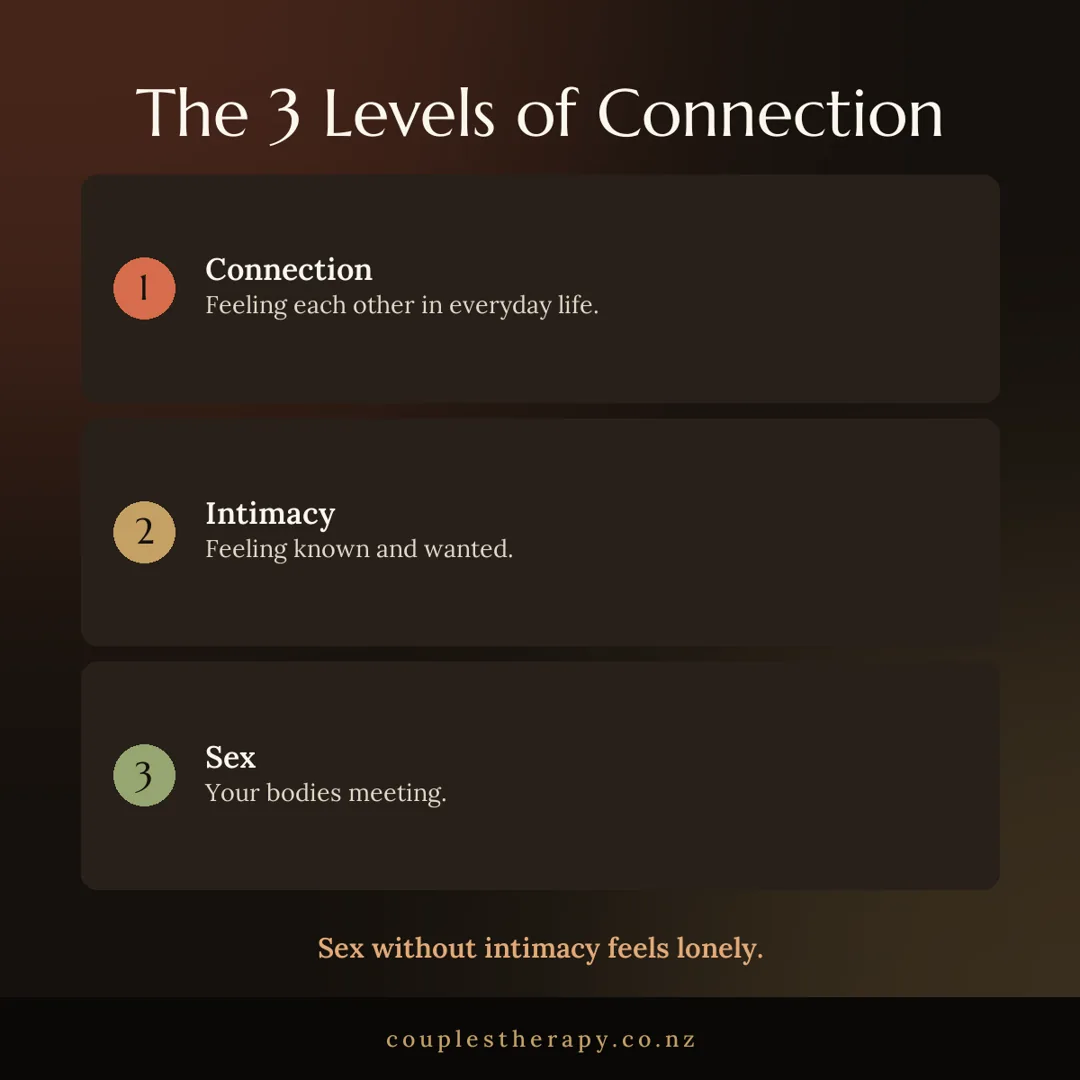
For erotic connection, you need to feel safe enough to soften and free enough to play. You also need to be present enough to let another person affect you without losing yourself.
Trauma affects the partner who carries it and the partner beside them.
The one who pursues may start to read the distance as a verdict on how attractive or worthy they are. They might become insistent, sulky, overly helpful or resigned.
Then the partner who withdraws feels even more pressured.
What began as a nervous system response turns into a painful dance, where one of you reaches harder and the other retreats faster.
Trauma doesn’t always look like avoidance
Some people respond to trauma by avoiding sex altogether.
Others chase sex compulsively, use it to get reassurance, or go somewhere else emotionally while their body takes part.
Neither pattern says anything shameful about who you are. Both can be ways of trying to manage feelings that are too big.
You may also notice a gap between affection and eroticism.
Cuddles feel safe, and desire feels risky.
Or intercourse is possible, while eye contact, being seen naked, asking for what you want or receiving pleasure feels unbearable.
There are many versions of intimate disconnection, and each one needs a different kind of care.
It depends on the person, the trauma history and the relationship you’re in now. It also depends on whether consent, choice and emotional safety are there between you.
There’s no universal timeline for “getting over it”.
But there’s a path towards more capacity, more connection and more choice.
Start with safety before sex
When a couple has been disconnected for months or years, it’s tempting to make sex the project.
That can backfire.
If your body links sexual contact with pressure or obligation, pushing for more sex can strengthen the very pattern you want to change.
Begin by making it truly okay to say no.
That means a no is met with respect, and never with punishment, eye rolling, pleading or a week of frosty silence.
Strangely, desire often has more room to come back once it’s no longer being demanded.
The partner who misses sex doesn’t have to pretend they have no needs.
Their longing deserves a voice too.
The work is to speak it from your vulnerable place and leave the accusation out.
You might say, “I miss feeling close to you, and I don’t want you to feel pressured. Can we find a way back together?”
That lands very differently from, “You never want me.”
In Emotionally Focused Therapy (EFT), I look at what’s underneath the protest. Under anger there’s often grief. Under avoidance there’s often fear.
When you can each name those deeper feelings, the cycle gets less intense.
You stop treating each other as the problem, and you start to see the protective pattern you both got caught in.
Rebuilding intimacy through the body
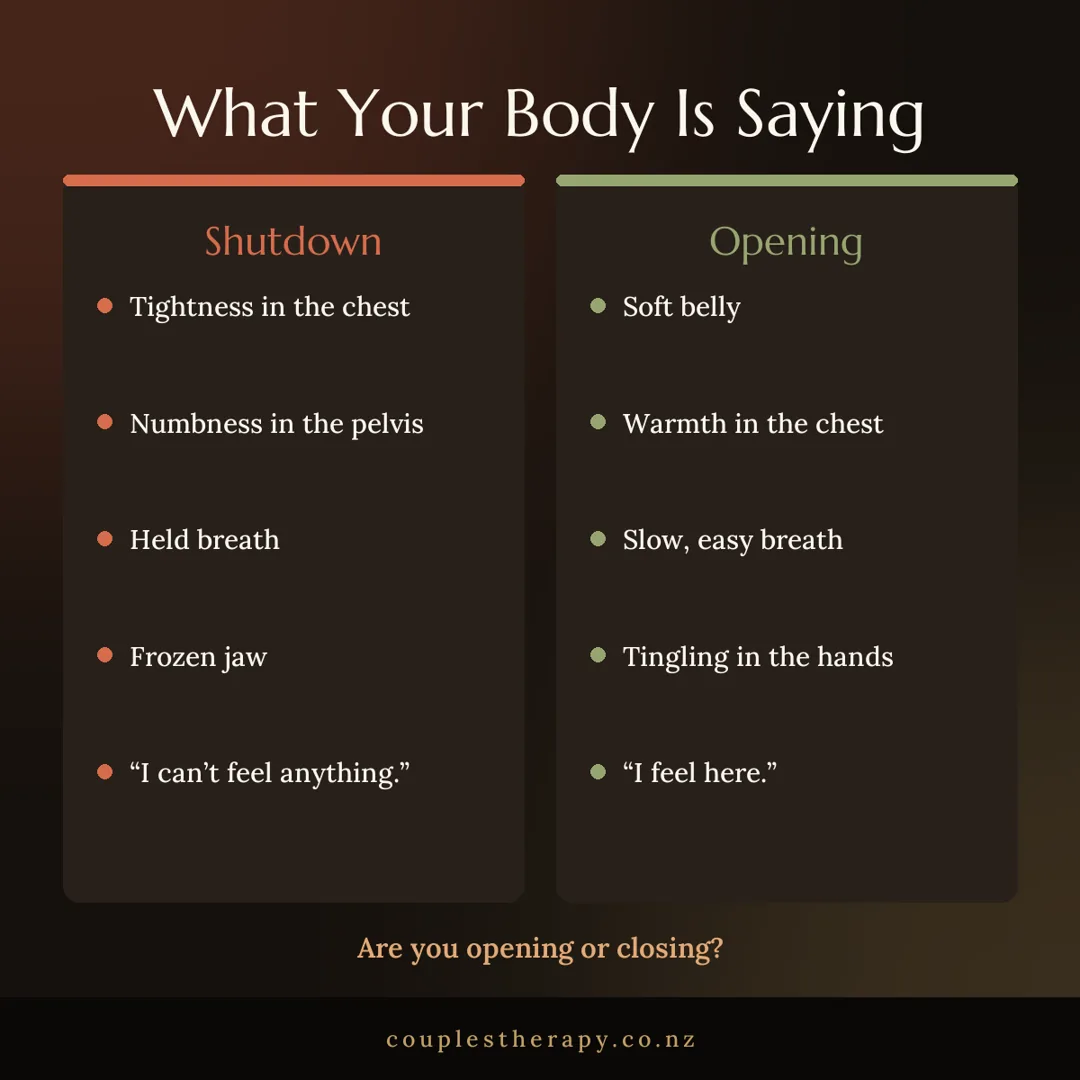
Talking can be powerful, but trauma isn’t only in our words.
It shows up in your breath and your muscle tension, in the way you scan for danger or collapse, and in the split second decision to leave your body when closeness gets intense.
That’s why repairing intimacy usually takes practice in the body alongside honest conversation.
Start smaller than you think you should.
- Sit facing each other for two minutes with no agenda.
- Hold hands and notice the urge to pull away or speed up.
- Offer a back rub with a clear agreement that it won’t lead anywhere else.
- Practise asking, “More, less, slower, stop?” and hearing the answer without taking it personally.
These exercises may look childish, yet they teach your body that contact can come with a say in what happens.
In a healthy erotic relationship, surrender is something you choose.
Polarity and play can feel deeply enlivening when there’s clear consent and you’re both present.
For some couples, structured sensual touch exercises are useful. For others, the first step is sleeping closer, sharing a long hug, or being able to talk about sex without either of you getting flooded.
There’s no prize for moving fast, and you don’t have to put on a show of healing for anyone.
What you’re building is a new experience of connection that feels safe to both of you.
What the nontraumatised partner can do
If your partner’s history is affecting your intimacy, being compassionate doesn’t mean erasing yourself.
You can be patient and still have needs of your own. You can honour their boundaries without accepting a relationship where every hard conversation is off limits.
Get curious about the pattern, and drop the story about how desirable you are.
Ask what helps your partner feel grounded before, during and after closeness. Listen for specifics.
Perhaps they need the lights low, more verbal check ins, a slower pace or more privacy. They may need time to shift out of parenting or work, or to know that stopping won’t cause a fight.
Then share your own experience honestly.
Trauma may explain a reaction, but it can’t be a permanent reason to avoid closeness.
Both of you deserve care.
If your conversations keep collapsing into defensiveness, silence or painful escalation, professional support can give you somewhere steadier to have them.
When to seek specialist support
A trauma informed couples therapist or sex therapist can help when intimacy sets off panic, dissociation, rage, shutdown, flashbacks or compulsive behaviour.
They can also help with a pursue withdraw cycle that won’t shift.
Individual therapy may be essential as well, particularly where there’s untreated trauma, active addiction, coercion or violence.
Couples work isn’t appropriate where there’s current abuse, or where one of you fears retaliation for speaking honestly.
Safety comes first.
An erotic practice, a communication script or a romantic weekend can’t repair a dynamic that’s built on coercion.
For couples who are fundamentally safe but stuck, deeper work can bring enormous relief.
You learn to recognise the cycle before it hijacks the evening. You learn to tend attachment wounds without turning the bedroom into a therapy session.
And over time, you make room for sex where neither of you has anything to prove.
It can become a place where you breathe and laugh together, feel your appetite and tenderness, and take the delicious risk of being fully known.
I believe your deepest love is still ahead of you when you’re both willing to meet what’s been shaping your distance.
You don’t need to force desire back into existence.
Create the conditions where you both feel safe, can tell the truth and can choose with your whole body, then let intimacy become an adventure again.
Want support with this in your own relationship? Find out about couples therapy with Tarisha, a private retreat for two, or our retreats for couples: the Valentine’s Retreat and The Wanaka Adventure. Or start with a free discovery call.