Most people find out in one stomach dropping moment.
You see a message on a phone, or your partner confesses late at night, and suddenly years of shared history feel shaky.
An affair recovery retreat for couples is very different from a romantic getaway with nice wine and a few earnest conversations. When it’s done well, it gives you protected, structured time to face the injury and understand what was going on around it.
Then you can decide whether you can build a relationship that’s more truthful than the one that broke.
What I see with couples who’ve been together a long time is that an affair is rarely only about sex.
There’s usually secrecy and rejection in it, years of resentment, a hunger to feel seen, or an old pattern that has finally reached its limit.
None of that makes betrayal acceptable.
But if you want to repair things, and you don’t want to stay stuck in blame and interrogation, you’ll need more than a list of questions fired across the kitchen bench between school drop offs and work calls.
Why it’s hard to start the repair at home
After an affair, home can start to feel like a courtroom.
One of you wants every detail and every reason. The other may collapse into shame, get defensive, or push frantically to “move on”.
You’re both on high alert.
Then the dishwasher needs unloading, someone has a meeting at 8am, and the conversation gets cut short and never gets finished.
Does this sound familiar?
A retreat takes you out of all that. You step away from the routines that have carried you for years, and that have sometimes protected you from each other.
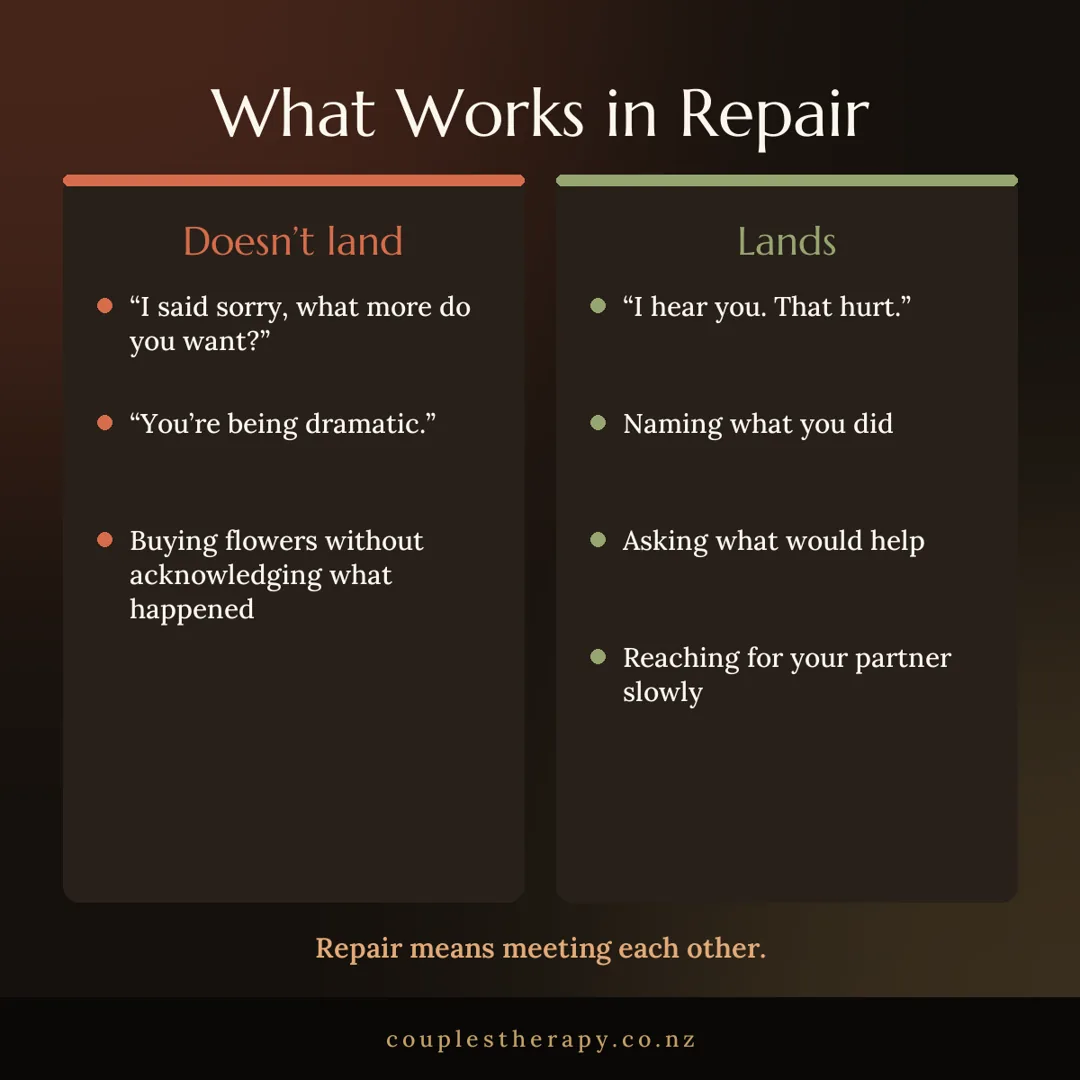
There’s time for the betrayed partner’s pain to be fully heard, without them being called dramatic or punishing.
There’s also room for the partner who had the affair to take full responsibility without being reduced to the worst thing they’ve ever done.
Doing both of those at once is hard, and it’s what starts the healing.
An intensive retreat won’t erase the intrusive images or restore trust by Sunday afternoon, and I’d be wary of anyone who promises that.
Trust takes longer than a weekend.
What it can do is interrupt the cycle so many couples get caught in: attack, withdrawal, confession, collapse, a short calm, and then another explosion.
You leave with a clear plan for the work ahead, and with the experience of having talked to each other in a new way.
What an affair recovery retreat for couples should include
Not every couples retreat is designed for repairing a betrayal.
A beautiful location and a breathwork session can be lovely, but they aren’t enough when the trust between you has been broken this badly.
Look for experienced facilitators who understand trauma and have proper clinical training.
Emotional safety before erotic reconnection
Safety comes first.
In Emotionally Focused Therapy (EFT), I look at what’s underneath the fight.
The betrayed partner may be saying, “How could you do this?” while their body is screaming, “Am I safe with you? Was any of it true?”
The partner who strayed may be saying, “I said I’m sorry,” while underneath they’re thinking, “I’m terrified you’ll never see me as anything more than a monster.”
Neither of you gets to skip over the other’s experience, and both experiences need room.
A skilled facilitator slows the conversation right down.
One of you firing questions while the other keeps explaining and defending doesn’t get you anywhere, so they help each of you name the raw feeling and ask for what you need.
It sounds simple.
In the room, with all that grief and rage sitting between you, it’s very hard to do.
Truth with boundaries
Repair needs honesty, but honesty doesn’t have to mean graphic detail that causes more trauma.
Most couples need help telling apart the information that makes sense of what happened from the details that turn into mental torture.
A retreat should help you agree on a shared truth:
- What happened
- What has ended
- What contact has stopped
- What accountability looks like now
For some couples, that means being open about phones, schedules, money or social media for a set period.
For others, the main work is ending years of avoiding each other emotionally. They finally talk about the loneliness, the resentment and the sex that went missing, without blame.
Nobody wants surveillance as a way of life.
The transparency is temporary, and it’s there so trust can be earned back through consistent behaviour.
The body can’t be left out
You can’t do affair recovery only in your head, because your body reacts to betrayal too. A hand reaching across the duvet can make you flinch, and eye contact can feel unbearable.
Sex may be absent, or urgent and confusing, or used as proof that everything’s fine when it plainly isn’t.
Somatic practice and sex therapy can reach something here that conventional talk therapy often misses.
You might begin with breathing, grounding, movement and guided exercises that help you notice what happens in your body when your partner comes close.
You learn to tell the difference between shutting down, going through the motions of intimacy, and actually choosing contact.
No one should be pushed into sexual touch after an affair.
Consent runs through all of this work, from the first hour to the last.
Sometimes the most intimate moment of a retreat has nothing to do with sex. One partner says, “I want you, but I need to go slowly,” and the other replies, “I can stay with you there.”
When a retreat is the right choice
A multiday intensive can be powerful when you’re both willing to show up honestly, the affair has ended, and things are stable enough for you to have difficult conversations with support.
It’s especially useful if you’ve spent months circling the same arguments in weekly sessions and need concentrated time to break through.
It may not be the right first step where there’s:
- Current family violence
- Coercive control
- Active addiction without support
- Ongoing deception
- A continuing affair
In those situations, safety, individual therapeutic support and firm boundaries come first. A retreat can’t repair the relationship while one of you is still damaging it.
You also need to be realistic about what you’re choosing.
You can come on a retreat without knowing whether you’ll stay together. It’s a place to get honest enough to make that decision with a clear head, when panic isn’t making it for you.
Some couples arrive desperate to save the marriage at any cost, and others arrive convinced it’s over.
Both often find the story is more complicated than they thought.
The work after you return home
The test comes when you’re back among the school lunches, the late trains, the family group chats and your usual side of the bed.
A good retreat sends you home with practices you can keep using, so you have more than a temporary emotional high.
That might mean:
- A weekly conversation with enough structure to stop it spiralling
- Agreements about how you’ll handle conflict and repair
- Time you set aside on purpose for emotional and erotic connection
Each of you also stays accountable for your own part.
It can also mean naming the moments when the old pattern shows up. One of you goes silent, the other pursues, and suddenly you’re back in the same painful dance.
Polarity work can help too when things have gone flat, which often happens after a long crisis.
Done well, it means exploring the energy that makes each of you feel present, bold, playful and alive. Nobody is asked to force themselves into masculine or feminine roles, or to copy somebody else’s idea of desire.
After betrayal, couples can get so busy processing what happened that there’s no warmth or fun left. Healing needs honest conversations, and it also needs experiences that remind you why this partnership is worth fighting for.
A harder, more hopeful question
Most couples start by asking, “Can we get back to how we were?”
The relationship you had before the affair may have held affection, loyalty and a lot that’s worth honouring.
It may also have held silences that cost you both dearly.
So I’d ask a different question.
Can we create a relationship where neither of us has to disappear, pretend, or betray ourselves to belong?
That’s what an affair recovery retreat for couples invites you into.
You can’t go back to how things were before the affair. You can build something more honest and more grown up, and possibly far more intimate.
The deepest love can still be ahead of you when you’re both willing to tell the truth and feel the grief, and then to practise a new way of coming close.
Want support with this in your own relationship? Find out about couples therapy with Tarisha, a private retreat for two, or our retreats for couples: the Valentine’s Retreat and The Wanaka Adventure. Or start with a free discovery call.