
You can talk to your partner every day.
You talk about the kids, the bills and what’s for dinner, and still feel miles apart.
The right emotional intimacy questions couples ask can interrupt that drift. One perfect question won’t fix a marriage, but honest questions help you show each other the parts of yourselves that busyness, resentment and self protection have hidden.
You don’t have to share everything or talk through every feeling before breakfast.
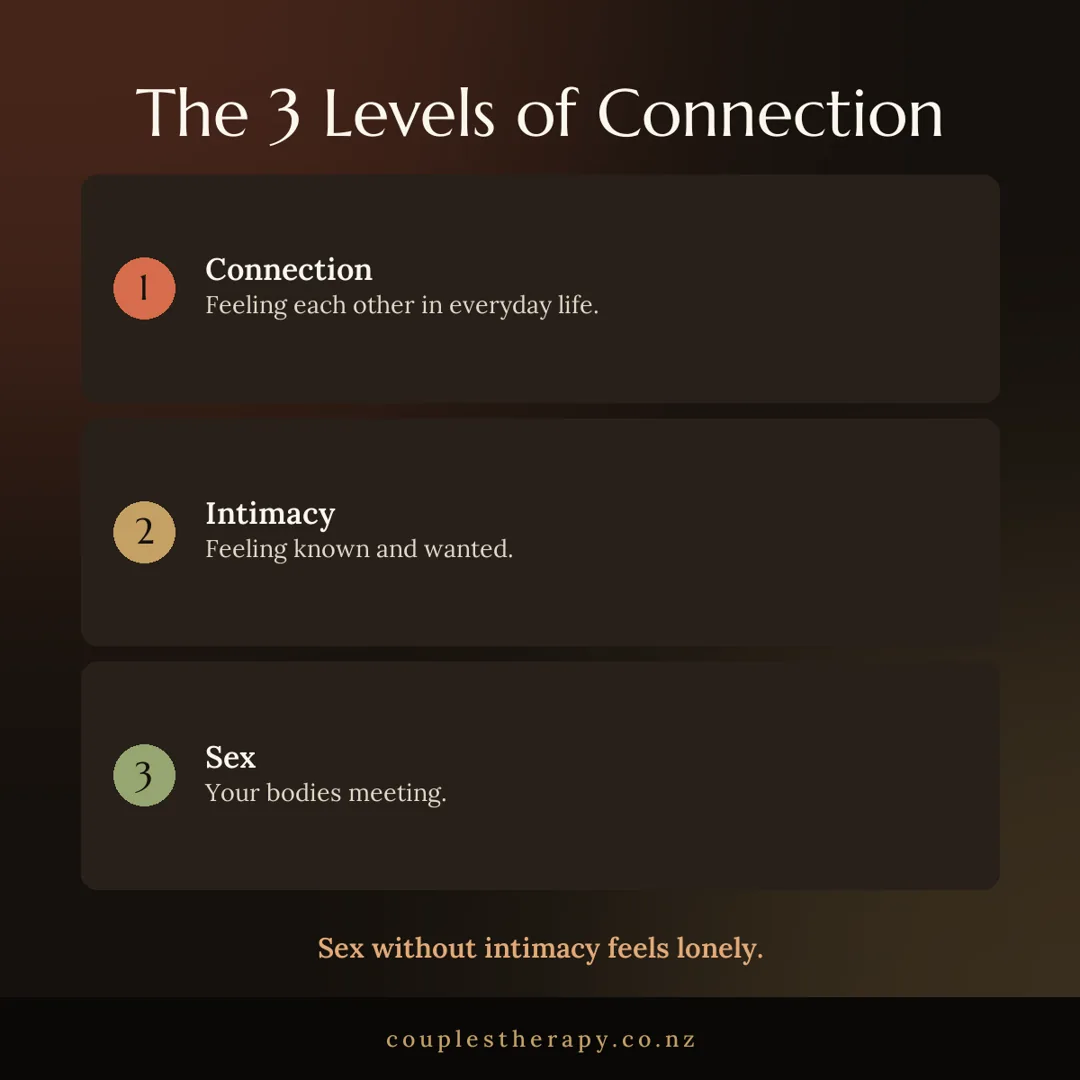
For long term couples, emotional intimacy is the feeling of knowing: you can see me, you can affect me, and I can safely reach for you when life gets hard.
You build that kind of connection through repeated moments where one of you takes an emotional risk and the other responds with care.
Why good questions can change how close you feel
Most disconnected couples have plenty of conversation.
They talk about the leaking tap, the grandkids, work dramas and who’s taking the ute in for a service. They may even talk about conflict for hours.
What’s missing is talking about what each of you is feeling underneath.
Does this sound familiar?
When one of you says, “You never make time for me,” the deeper message may be, “I miss being important to you, and I’m scared I no longer am.”
When the other retreats into silence, the unspoken truth may be, “I don’t know how to get this right, and I feel like a failure.”
This is the focus of Emotionally Focused Therapy (EFT).
It looks past the criticism, defensiveness and withdrawal to what each of you needs: to feel loved, safe and important to your partner.
This is also how desire can start to come back.
Erotic intimacy struggles when you feel judged, invisible or emotionally unsafe, because it’s hard to enjoy pleasure when your body is tense and expecting to be hurt again.
Questions help, but timing is just as important.
Don’t bring out a vulnerable question at 10.45 pm after three glasses of wine, or in the middle of an argument about your sister.
Choose a calm time when you won’t be interrupted and put your phones away.
Give yourselves permission to pause if either of you gets flooded.
18 emotional intimacy questions for couples
You don’t need to work through all of these in one sitting. Please don’t turn this into a formal review of your relationship.
Choose one or two questions, take turns, and give each answer some room.
The listener’s job is to understand.
Correcting the record, solving the feeling and explaining what you meant can all wait.
1. When have you felt most connected to me lately?
This question trains your attention on what’s already working.
The answer may be surprisingly small, like a hand on your lower back in the kitchen, a proper goodbye kiss, or five unhurried minutes in the car before walking into a family event.
2. When have you felt alone while we were together?
Ask this one with courage.
The answer may sting, especially if you believe you’ve been trying hard.
Listen to how it felt for your partner and don’t argue the details. “I can see how that would have felt lonely” brings you much closer than “That wasn’t what I meant.”
3. What do you wish I understood about the pressure you’re carrying?
In a long relationship we can get stuck in roles: the capable one, the anxious one, the distant one, the emotional one.
This question helps you see the person behind the role.
4. What part of yourself have you been hiding from me?
Perhaps it’s grief, anxiety about ageing, professional disappointment, a fantasy, resentment or a longing you’re afraid will be dismissed.
You don’t need to reveal every private thought. But it’s hard to feel close while you’re both hiding important parts of yourselves.
5. What do you need from me when you’re upset that you rarely ask for?
Some people want a hug.
Others need space, reassurance, practical support or a simple “I’m here”.
It’s easy to guess wrong. When you ask, you learn what your partner needs.
6. What happens inside you when we fight?
This invites each of you to name what’s happening inside you and leave the blame about behaviour out of it. “My chest tightens and I want to disappear” helps your partner understand you and respond with care.
“You always shut down” usually sends them further away.
7. What do you fear our recurring conflict means about us?
The fight about money, sex or housework is often about a much bigger fear: that we’re incompatible, that I’m not enough, that this relationship is dying.
When you say the fear out loud, it often loses some of its power.
8. What’s one hurt between us that still needs care?
Please don’t use this to go back over every old hurt. Pick one hurt that’s still sore and talk about it specifically.
The partner who caused the hurt doesn’t need to agree with every detail to offer genuine remorse and repair.
9. When do you feel most loved by me?
Love languages can be useful shorthand, but this goes deeper.
You may learn that your partner feels loved when you stand up for them in public, touch them without an agenda, notice their effort, or ask about the thing they care about before launching into logistics.
10. What have we survived that you’re proud of?
Couples who’ve been together for decades have been through a lot together.
Naming what you’ve endured and created together brings back the sense of being a team. It also reminds you that your relationship is more than the difficult time you’re in now.
11. What would make you feel safer bringing the hard truth to me?
This question asks you to take responsibility without punishing yourself.
Maybe your partner needs you to stop interrupting. Maybe they need less sarcasm, less instant problem solving, or proof that their anger won’t be met with three days of withdrawal.
12. What kind of affection do you miss?
Be specific.
Affection is good for you both whether or not it leads to sex.
A forehead kiss, spooning, playful touch or a long embrace can calm you both and help you trust each other’s touch again.
13. What helps you feel desired, beyond sex itself?
Desire doesn’t work like a switch.
For some people, it comes from feeling admired.
For others, it comes from seeing their partner take initiative, carry some of the emotional weight, dress with intention or make room for unhurried connection.
This conversation can be tender, funny and a little awkward, and that’s good.
Feeling awkward usually means you’re saying something new and honest to each other.
14. What gets in the way of you receiving love from me?
One of you may offer warmth that the other can’t take in, because of shame, past hurt or the belief that needing love is weakness.
You can’t force someone to receive, but you can understand the barrier together.
15. What do you miss about us as lovers?
You aren’t comparing your current sex life to your twenties here.
Sex in a long relationship has its own depth, with more honesty, more confidence and more permission to know what you want.
It still needs attention, and naming what you miss opens the way to what you want to create now.
16. Where have we become more like co-managers than partners?
Many couples arrive here without noticing.
They run a household brilliantly and stop courting each other.
Notice where running the household has taken the place of intimacy, then make one small change. You don’t need to reinvent your relationship by Tuesday.
17. What adventure do you want us to have in the next year?
Adventure can be a weekend away without the children, learning something sensual together, taking a risk in conversation, or saying yes to a new shared challenge.
Scaling a mountain or sleeping in a swag is optional, though both have their charms.
18. What do you want our love to feel like in this next season?
I’m asking how you want it to feel, which is a different question from how you want it to look.
It might be steady, playful, fierce, spacious or devoted.
This moves the conversation on from repairing what’s broken to choosing, on purpose, a relationship that feels alive.
How to make the conversation emotionally safe
How you respond shapes whether your partner will risk being honest again.
Start by reflecting back: “What I hear is that you felt dismissed when I kept looking at my phone.”
Then validate the emotional logic: “Given how much you were already carrying, I understand why that hurt.”
Share your own experience only after your partner feels received.
If one of you gets overwhelmed, take a break with a clear return time. A pause is healthy as long as you come back.
Come back when you can:
- Make eye contact
- Lower your voice
- Stay curious
If the same conversation keeps exploding or freezing, it may be time for guided support.
Some patterns are too loaded to shift through goodwill alone, especially where betrayal, chronic resentment, trauma or sexual pain are involved.
The deepest love is still ahead of you when you’re both willing to stop settling for being good companions and start being open with each other.
Ask one honest question this week.
Listen carefully, because the answer tells you something new about the person you chose, and are still choosing.
Want support with this in your own relationship? Find out about couples therapy with Tarisha, a private retreat for two, or our retreats for couples: the Valentine’s Retreat and The Wanaka Adventure. Or start with a free discovery call.