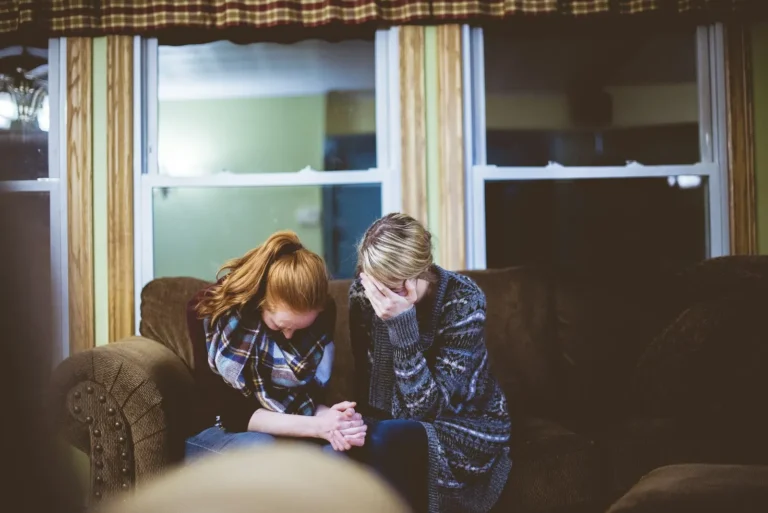
You’re having the same fight again.
One of you gets louder, faster and more insistent. The other goes blank, leaves the room, or gets sarcastic.
By bedtime you can both explain what happened, but neither of you can explain why it felt so enormous. That question is the starting point for trauma informed couples therapy.
It goes further than treating the argument as a communication failure you can tidy up with better scripts.
It asks what each nervous system is trying to protect, which old wound has been pressed, and how two people who love each other became opponents in the same kitchen.
For long term couples, this work can be a turning point.
Fewer rows is only part of the aim.
What I want for you is a relationship where safety, honesty, play and erotic charge have room to return.
What trauma informed couples therapy actually means
Trauma informed work recognises that experiences from the past can shape how we interpret closeness, conflict, touch, sex and dependence in the present.
Trauma can include:
- Childhood neglect
- Betrayal
- Family violence
- Sexual harm
- A frightening medical event
- Racism
- Grief
- Coercive relationships
- Years spent having to hold everything together alone
You don’t need a dramatic story or a diagnosis.
Sometimes the injury is a childhood where love was inconsistent. Maybe a parent was warm one day and unreachable the next.
Maybe anger filled every room of the house, or achievement earned approval while neediness brought shame.
Our bodies learn these lessons early.
Later, a delayed text, a partner’s flat tone or a hand withdrawn in bed can land with far more force than the moment seems to deserve.
A trauma informed therapist won’t label either of you as broken, difficult or avoidant and call it a day.
They understand that protest, shutdown, perfectionism, people pleasing and numbness are often intelligent survival strategies that have outlived their usefulness.
That approach changes how you talk to each other.
A couple can stop asking, “Why are you overreacting?” and learn to ask, “What just happened inside you, and how can I meet it without abandoning myself?”
Why loving couples can feel unsafe with each other
Most entrenched relationship patterns have very little to do with a lack of love.
What I see with couples is a lack of felt safety at the exact moment they most need connection.
Imagine one partner pursues when they’re distressed.
They ask questions, demand answers, get louder and want it resolved now.
Their partner experiences that intensity as danger and retreats or shuts down, which makes the pursuit more urgent.
Both leave convinced the other doesn’t care.
In fact, one of them is fighting not to be left, and the other is fighting not to be overwhelmed.
Does this sound familiar?
Sexual distance often follows the same pattern.
If emotional closeness has become loaded with pressure, criticism or unpredictability, desire can retreat. The body doesn’t reliably open to pleasure when it’s bracing for judgement, obligation or rejection.
You might still share a home, a mortgage, grandchildren and a perfectly organised calendar, and yet you’ve stopped feeling like lovers.
Trauma informed couples work makes room for a frustrating truth, which is that intimacy can’t be forced.
Safety and comfort are different things, too.
Feeling safe can involve telling the truth you’ve avoided for years, holding a boundary without freezing your partner out, or naming that sex has become something you go through the motions of and no longer feels alive.
The work happens in the nervous system as well as in talking
Talking is valuable, but insight alone doesn’t settle a body that has learned to scan for threat.
In your head you might know that your partner is a different person from your critical father, your unavailable mother or the former partner who was unfaithful.
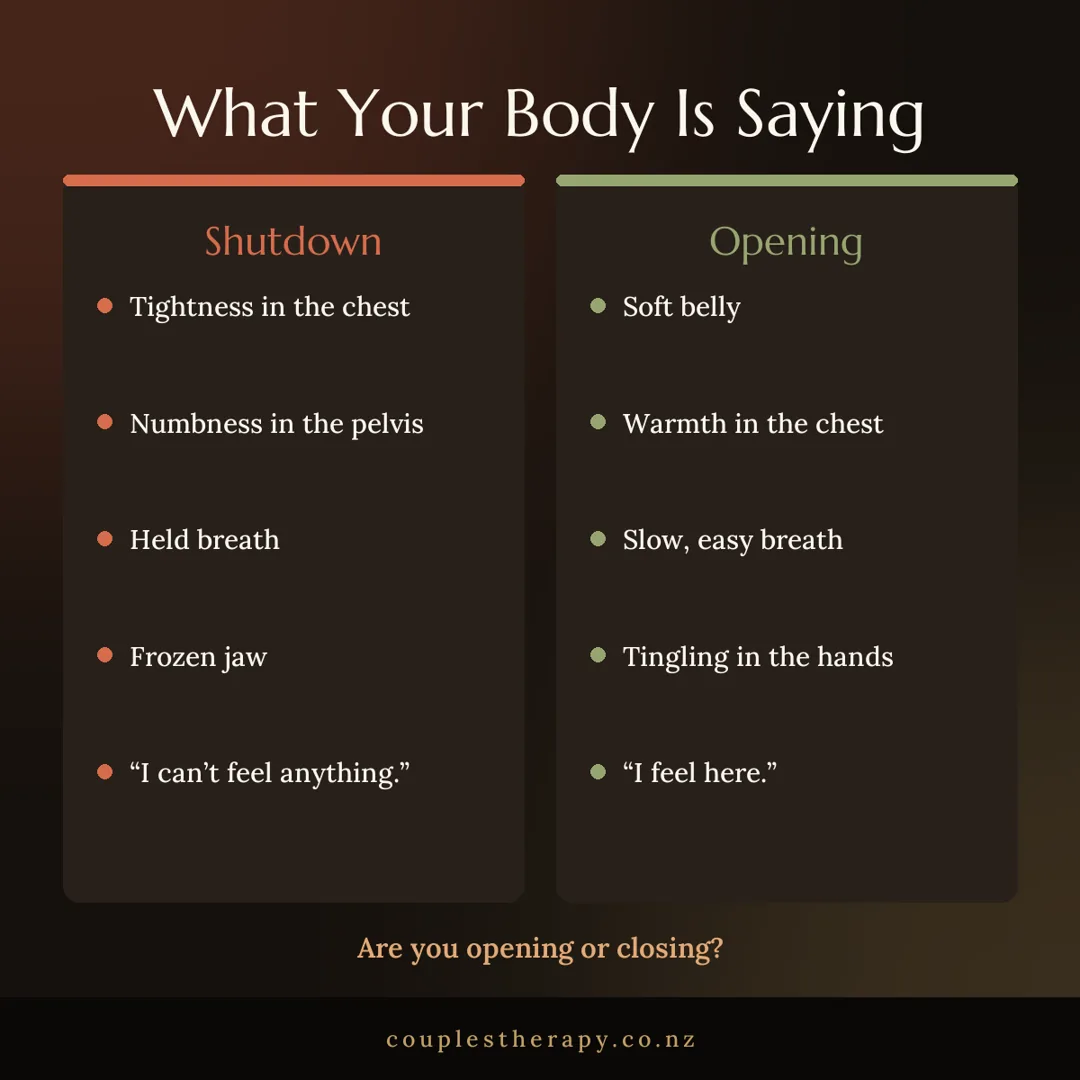
Your chest can still tighten when they turn away.
A skilled process slows the moment down.
Before you debate the facts, the therapist might help you notice what happens in your body. It could be a clenched jaw, heat behind the eyes, a buzzing urge to flee, or a heaviness that makes words disappear.
Naming those cues gives you a moment to pause between feeling triggered and attacking.
From there, couples practise new experiences of connection.
The pursuing partner learns to say what they long for, in place of the accusation: “When you go silent, I panic that I don’t count.”
The withdrawing partner learns to stay present without being flooded: “I’m here. I need thirty seconds to breathe, then I want to hear you.”
There’s nothing sentimental or staged about this.
Repeated moments of repair teach both nervous systems something new, which is that you can have hard feelings and stay connected.
Over time, the old cycle loses some of its grip.
Attachment repair gives conflict a new ending
Emotionally Focused Therapy (EFT) is particularly powerful in trauma informed relationship work because it focuses on attachment.
It helps couples identify the dance they get trapped in, reach the vulnerable emotions beneath their defensive behaviour, and create more secure responses to each other.
You won’t end every conflict in perfect agreement, and you don’t need to.
Mature partners can disagree about money, parenting, ageing parents, or whether the dishwasher has been loaded with the care of a museum curator.
The goal is to know your relationship can survive the disagreement.
Body based practices help you feel intimacy again
For couples who’ve lost sexual connection, a trauma informed approach starts with consent, pacing and choice.
It doesn’t jump straight to techniques, frequency targets or a very awkward homework assignment. Embodiment practices can help you both notice what a genuine yes feels like, and how it differs from a no, a maybe and a freeze response.
Sensate touch, breath, eye contact, movement and guided conversation may be used to rebuild contact without any demand for intercourse or pressure to put on a show.
For some couples, this is the first time in years that touch has felt relaxed, with nothing expected in return.
You can’t turn desire on like a tap with enough date nights. It responds to emotional security, freedom, novelty, self expression and the ability to inhabit your own body.
That’s why sex therapy, polarity work and body based practices work so well alongside attachment repair.
With only one of them, couples can end up close but with no desire, or with a strong sex life and little emotional safety.
What to expect from the right therapist
Trauma informed doesn’t mean endlessly revisiting the past, and it doesn’t mean the past gets to excuse harmful behaviour.
A good therapist will be compassionate and clear.
They’ll help you understand where a response comes from while holding each of you responsible for what you do next.
Expect a pace that challenges you without overwhelming you.
The therapist should watch for flooding, dissociation, coercion and shame, and shouldn’t push for raw disclosure because it looks dramatic.
They should also be able to say when individual support is needed alongside couples work.
If there’s current family violence, intimidation, active coercive control or fear of retaliation, conjoint therapy may not be the safe first step.
Ask how the therapist works with attachment injuries, sexual disconnection and nervous system regulation.
Ask whether they have training in couples therapy and sex therapy as well as individual trauma treatment.
Chemistry counts too.
You need someone who can stay steady when emotions run high, without taking sides or reducing your relationship to a set of symptoms.
Don’t settle for a relationship that only functions
After years together, it’s easy to call a flat relationship normal.
You become efficient co-managers. You discuss logistics with military precision, kiss on autopilot, and postpone the honest conversation until some mythical less busy month.
Then a crisis arrives, or one of you says, “I love you, but I don’t feel alive here.”
You don’t have to wait for that moment.
Trauma informed couples therapy offers a path back to each other that respects what you’ve been through, without letting the past run your relationship.
At Couples Therapy & Retreats, I work with couples on what’s possible: feeling closer emotionally, arguing without doing damage, and wanting each other again.
The deepest love may still be ahead of you.
Your history doesn’t disappear, but it doesn’t have to decide how you respond to each other now.
Want support with this in your own relationship? Find out about couples therapy with Tarisha, a private retreat for two, or our retreats for couples: the Valentine’s Retreat and The Wanaka Adventure. Or start with a free discovery call.